





CME: Crop Conditions Critical for Financial Prospects
US - CME's Daily Livestock Report for 3rd September 2008. 4 September 2008
 1 minute read
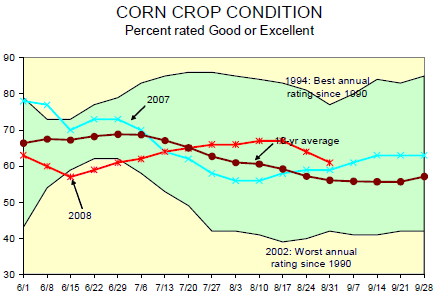
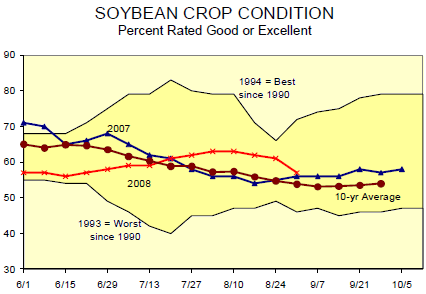
We haven’t addressed crop conditions for a few weeks but they remain critically important for the financial prospects of U.S. and world livestock and poultry producers. The familiar charts at right show the percentage of corn and soybean acres rated as good or excellent in USDA’s weekly Crop Condition Report. Both crops remain in better condition that last year’s crop and the average for the past 10 seasons and remain in the middle of the historical range. But the conditions of both crops have deteriorated in recent weeks as well, with corn declining to 61% and soybeans declining to 57% rated good-excellent as of August 31. The top two categories for corn conditions has lost 6% in the past two weeks while the same categories for soybeans lost 4% in just the past week as dry conditions prevailed in many parts of the Midwest. Recent conversations with pork producers who also raise crops indicate that the crops in northwest and north-central Iowa and Minnesota still look very good while those of Illinois and Indiana have deteriorated somewhat in recent weeks. The remainder of Iowa and Missouri are still looking at below-normal yields (and some will be significantly below) due to late-planted crops.
And the maturity of these crops is still a big issue with first frost looming. USDA reported that only 6% of corn acres were mature as of Sunday compared to a 5-year average of 16%. Only 45% of corn acres are dented (a key maturity phase in which corn kernels form a “dent” or small dimple) compared to a 5-year average of 65%. The only maturity factor currently published for soybeans is the percentage of acres setting pods. That number for this year is 94% versus a 5-year average of 97% — but one would expect those high numbers at this point. The question will be whether those pods have time to fill and the beans have time to grow to mature size. As we have pointed out before: The first frost date will be crucial for these crops and, by extension, the livestock industries.