





Management and Control of egg size
By Ken Laughlin, group technical director, Aviagen, Scotland - The management and control of egg size presents some interesting challenges and opportunities as part of the overall management of broiler breeders. 24 October 2005
 5 minute read
Management and Control of egg size - by Ken Laughlin, group technical director, Aviagen, Scotland - The management and control of egg size presents some interesting challenges and opportunities as part of the overall management of broiler breeders. 
Achieving good early egg size is perceived as critical to ensuring early broiler chick quality and performance, however, excessive late egg size can be associated with egg breakage, poor hatchability and lower production. The latter occurs because there is a close negative relationship between egg production and egg size.
Taking this into account it is important to understand all the factors affecting egg size and to manage them to achieve a balance between broiler performance, egg size and persistency of lay.
Importance of egg weight
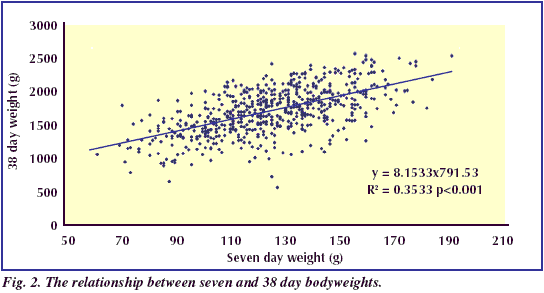
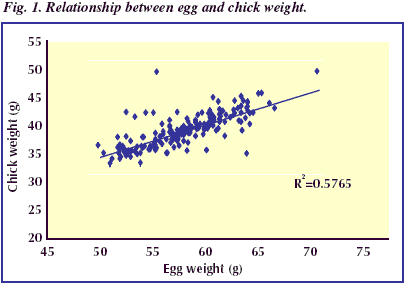
There is a close correlation between egg weight and chick weight (see Fig. 1). Day old chick weight is one of the major factors influencing seven day weight and, under good conditions, this seven day weight has a major effect on final broiler weight (see Fig. 2). For each additional gramme of seven day weight the 38 day weight increases by up to 8g.
This sequence clearly drives the need to improve early egg weights. There is, however, a strong correlation between early and late egg weights and it is the latter which needs to be controlled. The positive relationship between bodyweight at sexual maturity and egg size is clear, and may be beneficial for early egg size. However, it is less desirable for late egg size since this higher bodyweight will affect egg size throughout the whole life of the flock.
Factors to be addressed
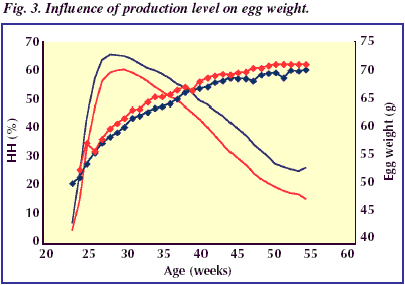
Flocks with poorer production tend to have higher eggs weights, that is the bird maintains egg mass. The two production and egg weight curves shown in Fig. 3 illustrate this. Therefore, maximising egg production throughout the life of the flock will assist in the control of late egg size. The management of females into lay should be focused on stimulating and supporting egg production, using the appropriate target bodyweight and recommended lighting programme.
Regular feed increases are essential to ensure the appropriate bodyweight gain and timely onset of lay. In early lay (pre-peak) achieving the correct bodyweight is also important and birds should be fed to meet the increasing demands of egg production and growth to achieve optimum production. It is vital to observe and react to the changing requirements of the birds at this time. Management of females post peak should be directed towards maintaining persistency of egg production by adjusting feed amounts in response to changing bodyweight and egg production.
Bodyweight effects
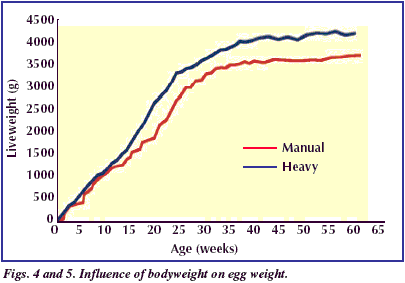
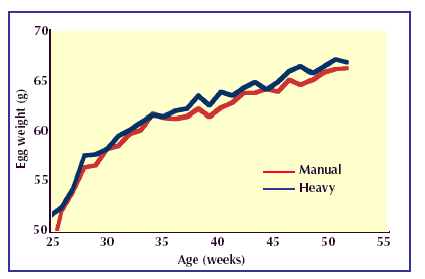
Higher bodyweights are generally associated with bigger eggs. Maintaining birds on a bodyweight profile significantly heavier than current recommendations, (+12% at 60 weeks) will give an increase in late egg size of approximately 1.5g, as shown in Figs. 4 and 5. This highlights the importance of adequately controlling bodyweight in lay. If there is also poorer persistency as a result of this increased bodyweight, the increase in late egg size will be higher.
Nutrition and egg weight
Nutritional specification can partially control late egg size. This should, however, be balanced with the birds’ need to receive the correct nutrition if maximum egg production is to be achieved. The most important nutrients for control of egg size are linoleic acid, protein and specific amino acids. Reducing the level of one, or a combination of these nutrients, in the diet will reduce egg size. However, this reduction should not be before 40 weeks of age as this will reduce egg production. The introduction of an extra second stage breeder diet from approximately 45 weeks of lay may be beneficial in helping to control late egg size.
Reducing the linoleic acid content of this diet would be beneficial, but it is worth noting that this is more difficult to achieve in maize based diets than in wheat based diets. Lower total protein in the diet may also be beneficial but a reduction in dietary protein can also reduce egg numbers as well as egg size.
The most significant amino acid affecting egg weight is methionine. Reducing the methionine content of the second breeder diet is another option for controlling late egg size. Once again, there is a very fine balance between supporting persistent egg production and controlling late egg size. Recent data from the Netherlands showed that reducing the protein and linoleic acid content of the diet fed from 47 weeks of age reduced mean egg weight (48-60 weeks) by 0.7g without affecting the rate of lay.
Therefore, whilst it is possible to control late egg size by manipulating nutrition, such an approach should be exercised with caution so that egg production is not adversely affected.
Overfeeding and underperforming
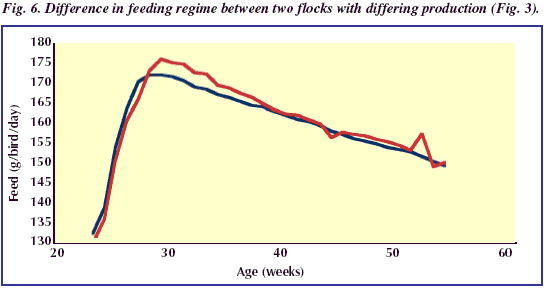
A major challenge is presented by flocks which are considered to be under performing coming up to peak and then offered very high feed amounts in an attempt to remedy the situation. This course of action is rarely successful, often resulting in a more rapid fall in persistency after peak, poorer late hatchability and very high late egg weights. Fig. 6 shows the difference in feeding patterns between the two flocks referred to in Fig. 3.
The poorer producing flock received more feed at peak and, as a result, a relatively severe feed withdrawal after peak. This had a negative impact on persistency of production (see Fig. 3), and resulted in an associated increase in egg weight.
These data highlight the importance of achieving good feeding management in lay, aimed at meeting the increasing demands of egg production and growth. Birds which are fed more than they require for egg production will develop an abnormal ovarian structure and then gain excess weight, which will depress egg production and thus increase egg weight.
Feed consumption after peak should take account of changes in bodyweight and egg production ensuring that flocks continue to gain weight and that the withdrawal of feed is not too rapid.
Conclusions
Controlling late egg size requires the achievement of a balance between bodyweight control, egg production and egg size. If female bodyweight or egg production strays from target, then there will be a consequent effect on egg weight if no response is made. The key to controlling late egg size is, therefore, consistency and persistency – persistency of production, consistency of adequate bodyweight control and, most importantly, consistency of good management. In essence, it is vital to, focus on the issues and to pay attention to detail.
Source: Aviagen - Appeared in International Hatchery Practice - Volume 19 Number 8