





Nanotechnology May be Applied to Food Safety
US - A microscopic biological sensor that detects Salmonella bacteria in lab tests has been developed by an Agricultural Research Service (ARS) scientist and university colleagues. The sensor could be adapted to detect other foodborne pathogens. 16 December 2008
 1 minute read
The sensor is part of an evolving science known as nanotechnology – the study and manipulation of materials on a molecular or even atomic level, measured in billionths of a metre, which is about 10 to 100 times thinner than a human hair.
There are examples of biosensors in nature. Insects detect tiny amounts of sex pheromones in the environment and use them as a beacon to find mates. And fish use natural biosensors to detect barely perceptible vibrations in the surrounding water.
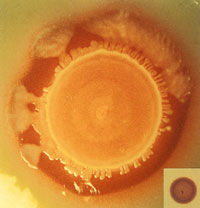
ARS engineer, Bosoon Park, at the Quality and Safety Assessment Research Unit in Athens, Georgia, and cooperators at the University of Georgia used nanotechnology to develop the biosensor. The detection method may have great potential for food safety and security, according to Dr Park.
The biosensors that Dr Park and his university colleagues developed include fluorescent organic dye particles attached to Salmonella antibodies. The antibodies hook onto Salmonella bacteria and the dye lights up like a beacon, making the bacteria easier to see.
People who eat Salmonella-infected food products can get salmonellosis, a disease characterized by nausea, vomiting, severe diarrhoea, and sometimes death.
For his research, Dr Park recently received the prestigious first place Innovation Nano Research Award at the Sixth International Nanotech Symposium and Exhibition, in Ilsan, Korea.