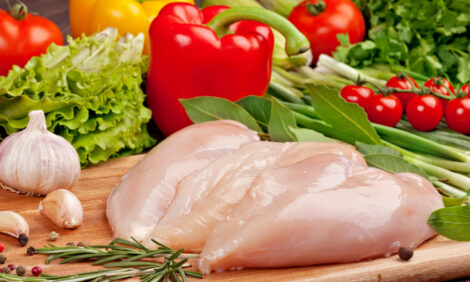






Broiler consistency: Why uniform broilers drive profit
USSEC’s Thomas D’Alfonso explains how consistent nutrition helps hit target weights, improve processing efficiency and capture premium revenue
 9 April 2026
 6 minute read
 By:
By: Thomas D’Alfonso, Ph.D., Worldwide Animal Nutrition Focus Area Director, U.S. Soybean Export Council (USSEC), spoke recently to The Poultry Site’s Sarah Mikesell about a challenge that goes beyond feed cost: delivering birds to the processing plant at the right weight, at the right time, with the consistency that premium buyers demand.
When broiler producers think about feed decisions, the conversation often starts with cost per ton. Why do you think it's an incomplete picture and where should the conversation start?
In the agriculture industry, we are often focused on least-cost. We look at least cost feed formulation with the lowest cost per pound or kilogram of animal protein produced. However, we forget about the important part of profit, and it makes up over half of profit, and that’s revenue.
It’s important to get those birds to the processing plant consistently, uniformly and on time. Growth rate and feed conversion matter and contribute significantly to bottom line profitability for the producer that’s captured at the processing plant.
Flock uniformity is important in broiler production. Can you help connect the dots between what happens in the feed and what happens at the processing plant gate? What is uniformity actually worth in dollars terms?
When discussing how feed connects to processing plant performance, we need to consider essential amino acids and metabolizable energy. Those components are what primarily make the chickens grow to their genetic potential.
Today's modern genetics demand a high-quality fuel in the diet, and that means a high-quality soybean meal derived from U.S. Soy. When that critical ingredient is present, it provides the essential nutrients consistently and animals get to the processing plant uniformly, creating more revenue.
This happens for two reasons. First, they may get there faster, which means that over time more cycles can occur. Second, they get to the processing plant within target, and that's where the highest revenue comes in.
Revenue increases when the body weights are within the tolerances, meaning within the lower specification limit and the upper specification limit. Producers get less per pound or kilogram if they're low weight or even if they're higher weight. Depending on the operation, that can be one of the biggest factors in revenue. You're trying to hit a specific window, and if the birds do not grow predictably or uniformly, you're not going to hit that window.
You've referenced buyers who operate with very tight tolerances on bird weight. How does the quality of the protein source in the feed influence whether a flock hits those specs or misses them?
With chicken flocks, nutritional deficiencies do not affect all the animals at the same time. The marginally performing animals will be impacted the most. Producers may still see a rate of growth, but inconsistent digestibility will widen that rate over time. This adds up as the animal goes from starter to grower to finisher diets, and at that point, it’s hard to recover uniformity.
Producers try to resolve this by overfeeding nutrients such as the essential amino acids. The top ones won’t perform any better than their genetic potential, but the bottom ones will come up. However, this is costly. It's better to start with high-quality, critical ingredients in the diet, like highly digestible soybean meal derived from U.S. Soy.
One of the core claims about soybean meal derived from U.S. Soy is superior amino acid digestibility. What does that mean practically for a nutritionist formulating broiler diets, and why does consistency and digestibility matter as much as the level itself?
Let’s look at lysine. In soybean meal, you might expect lysine to be 3%, but not all the lysine is digestible. Processing can have a significant impact on soybean meal digestibility.
Soybeans coming from tropical, wet climates like Brazil are often heat dried with wood burning mechanical dryers. This causes heat damage, which negatively affects the digestibility of the essential amino acids and metabolizable energy. Lysine is an important amino acid. During processing, there’s a chemical reaction called the Maillard reaction, where lysine will bind with carbohydrates to make them indigestible. This results in lower energy and digestibility of that essential amino acid.
For feed formulators looking for a high quality soybean meal, it's essential that they source the soybean meal derived from U.S. Soy to have low, uncommon heat damage. This provides the highest digestibility they can to formulate diets at least cost and meet the nutrient requirements of today's high-performing genetics.
Modern broiler genetics have incredible potential. What does it take nutritionally to unlock that potential and where does soybean meal quality fit into that equation?
I like thinking of modern poultry genetics as high performing race cars. You wouldn't want to put inferior fuel in a race car. Similarly, when we look at soybean meal derived from U.S. Soy, it provides the essential building blocks. It is the core ingredient when it comes to the essential amino acids that increase growth rate to reach an animal’s genetic potential. Soybean meal is digested very efficiently.
We're seeing more metabolizable energy and net energy out of the soybean meal because of these genetics. Soybean meal derived from U.S. Soy has nearly as many calories per unit as corn does. These are the building blocks that lead to animals performing uniformly to their genetic potential.
Broiler operations typically run 35- to 42-day production cycles. How do incremental improvements in average daily gain translate into additional cycles over the course of a production year? What does this mean for the bottom line?
Today, we're seeing broiler production increasing the number of days that they're produced to get higher body weights for rotisserie chickens and to get more animal protein per shackle at the processing plant.
To get those animals to the processing plant at target weight, every diet needs to include proper nutrients provided consistently. This helps increase animal growth rate in a uniform manner.
When the animals grow faster, it means that over time you can get more cycles per year. The consistency of soybean meal in the diet helps with planning and scheduling. Whether it's a 35-day or 56-day bird, you want them at target weight because you're scheduling processing with an expectation that they'll be at a particular body weight. You can count on that when you have the right ingredients in the diet and that includes having soybean meal derived from U.S. Soy as a core ingredient in the diet.
Does this assist with meeting buyer expectations?
Yes, and buyer expectations matter when it comes to profit. Buyers of poultry products coming from the processing plant, particularly restaurants and fast food restaurants, need to have a consistent product to create a uniform cooking process. They’re looking to have that consistency to produce meals that are perfectly cooked.
U.S. Soy carries a sustainability story rooted in how American farmers manage their land. From a broiler producer selling into global markets, how does that sustainability story connect to their own business growth opportunities?
Sustainability and business growth are tied together in many surprising ways. The physical characteristics of fields matter. The U.S. Soy farmer typically comes from a multi-generational family-owned farm who knows their soil and the importance of preserving it when it’s time to pass it on to the next generation.
It's not just sustainable because there's no deforestation, it’s sustainable from a business perspective. Families want to sustain the land from generation to generation, and knowing the needs of their soil also means that they don't overuse inputs in the soil.
When we look at the end user, there are several similar characteristics. Our poultry producers around the world often come from multi-generational businesses who have reputations that they're producing high quality and sustainable poultry products for the consumers. These reputations are dependent on everyone upstream providing them sustainable ingredients consistently.
Soybean meal derived from U.S. Soy is the biggest opportunity for a poultry producer to lower their carbon footprint, improve animal performance and lower feed costs all at the same time.

Sarah Mikesell
Sarah Mikesell grew up on a five-generation family farming operation in Ohio, USA, where her family still farms. She feels extraordinarily lucky to get to do what she loves - write about livestock and crop agriculture. You can find her on LinkedIn.