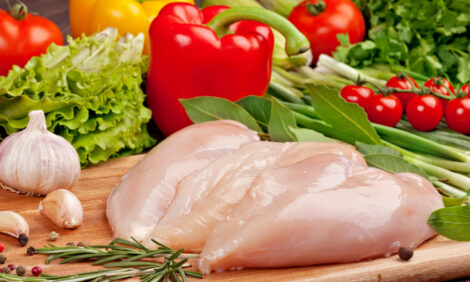






How safe is the food on your plate?
About 300,000 foodborne illness cases reported in the UK each year
 8 December 2025
 2 minute read
 By:
By: The global poultry industry faces significant challenges from zoonotic diseases which not only threaten poultry health and productivity, but also pose serious risks to human health.
It’s been estimated that of the 300,000 foodborne illness cases reported in the UK each year, more than half are related to poultry meat.
Whilst Campylobacter is recognised as the most common cause of bacterial foodborne illness in the UK, other food pathogens including Salmonella and Escherichia coli are also a major threat to human health.
A new book sets out to become the ‘go-to’ reference for how best to deal with these zoonotic threats and prevent future outbreaks.
Improving poultry meat safety and sustainability features contributions from an impressive list of international researchers working in academia and industry and has been edited by Professor Steven C. Ricke – one of the world’s foremost authorities on poultry meat safety.
“The contents will be applicable to the poultry industry's everchanging regulatory environment and expanding scientific exploration”, says Dr Bill D. Potter, Extension Specialist in Poultry Food Safety & Processing at the University of Arkansas, USA.
“The highly-experienced authors and distinguished editor will provide many thought-provoking perspectives in regards to continuous improvement in poultry meat safety and several ongoing sustainability initiatives,” he adds.
Given the move away from the excessive, prophylactic use of antibiotics (and its contribution to antimicrobial resistance), there is a renewed focus on biosecurity measures which themselves face greater challenges with the shift towards giving poultry greater freedom of movement on welfare grounds.
“Biosecurity is the first line of defence against infectious diseases in poultry and if these measures are implemented correctly, they can significantly reduce the risk of disease transmission,” says Francis Dodds, Editorial Director at Burleigh Dodds Science Publishing.
“But biosecurity is more than just washing your hands,” he adds.
A significant biosecurity measure is to minimise contact between poultry and wild birds through physical separation, such as fences or enclosures.
However, in some cases more extreme measures are required. For example, at the peak of the H5N1 avian influenza outbreak in November 2021, the UK government implemented a mandatory housing order for all poultry and captive birds. Remarkably, this housing order lasted for more than a year and half as the nation (and the rest of the world) battled against rising infection numbers.
Through the implementation of effective disease management programmes which optimise key safety measures, such as biosecurity and vaccination, the poultry industry can work towards mitigating the risks posed by zoonotic diseases, and in turn, produce healthier flocks and safer poultry products.
"With its wide range of content and perspectives, this book will be a very valuable resource for poultry operations managers, food safety leaders, poultry health professionals, researchers, students, and others affiliated with the industry,” concludes Dr. Potter.