




Predictions for poultry production in 2026
Vincent Fevrier, VP Sales & Marketing Europe EMEA & Oceania at TARGAN outlines his predictions on the trends set to redefine poultry production in 2026.
 8 December 2025
 4 minute read
 By:
By: As we step closer towards 2026, the adoption of advanced emerging technologies will continue to reshape the poultry industry, demanding greater alignment across the value chain. With global demand for broiler meat on a steady upward trajectory, producers will need to navigate how to maintain profitability, while meeting evolving consumer expectations around welfare, sustainability and food safety.
Following recent discussions with industry leaders from across the global value chain, Vincent Fevrier, VP Sales & Marketing Europe EMEA & Oceania at TARGAN outlines his predictions on the trends set to redefine poultry production in 2026.

1. Evolve or fall behind
As chick sexing gains momentum across the industry, it is consistently delivering measurable results in production efficiency and profitability, offering hatcheries that adopt it a clear competitive advantage.
Sexing at hatch allows for tighter control across the value chain, with greater flock uniformity and reduced live weight variability. This improves feed conversion ratios (FCR), enables more precise machine calibration at the processing plant, and results in fewer carcass downgrades. Sex-separate rearing on the farm allows producers to align housing environments, feeding programs, and stocking densities with the unique needs of males and females. These adjustments lead to more predictable growth patterns, improved yields, and stronger welfare metrics.
With the widespread adoption of chick sexing, hatcheries that fail to make the switch will likely face challenges in meeting customer demands for uniformity, efficiency, and cost control. Earlier adopters will secure greater leverage, establishing themselves as the preferred suppliers for integrators and processors seeking consistency and predictability. Over time, these leaders will not only benefit from this approach operationally and financially but will set a new benchmark in poultry production that non-adopters will struggle to reach.
2. Automation will take the lead
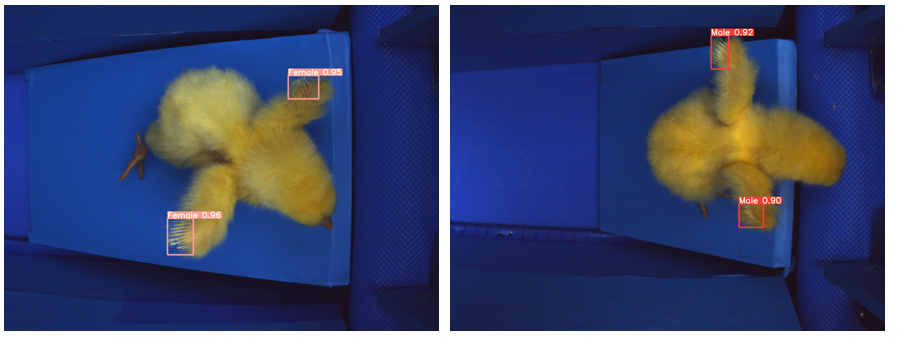
For years, hatcheries that practice sex-separate broiler rearing have typically relied on manual methods. However, the associated labor costs and logistical complexities of manual sexing limit its practicality, especially in large-scale hatcheries. The process is prone to human error and heavily dependent on workforce training. With labor pools shrinking in various regions, alongside high staff turnovers and expensive training costs, this approach has become increasingly difficult to maintain. The rise of automation in sexing marks a turning point, engineered for efficiency and consistency.
When it comes to scalability, automation continues to surpass the limits of manual sexing. TARGAN’s WingScan™ systems are now sexing over 30 million birds each week – unlocking productivity levels deemed unattainable through manual sexing. The automated feather sexing system allows large-scale hatcheries to meet demand reliably and consistently, while offering modular designs to smaller hatcheries that fit into existing facilities.
In 2026, automated systems will become the industry standard. As well as consistently delivering accuracy levels of 97% (WingScan), automation enhances chick welfare by minimizing the stress caused by direct handling.
For producers, the transition from manual to automated sexing is not just about cost savings, it’s about resilience. Automation provides hatcheries with greater operational certainty and allows the wider value chain to plan with confidence.
3. Precision vaccination will secure flock health
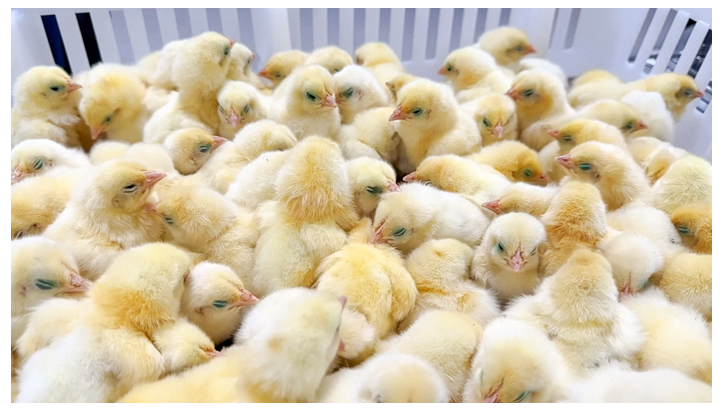
With antimicrobial resistance (AMR) and Avian Influenza a critical global challenge, poultry producers are under pressure to maintain strict biosecurity measures while reducing antibiotic use. Vaccination at hatch is essential to this, yet traditional spray or manual methods are typically labor-intensive, and lead to inconsistent coverage or wasted doses.
Precision vaccination technologies offer a solution and will emerge as a cornerstone of flock health in 2026. Using AI imaging, this approach prioritizes consistency by delivering exact doses to each chick, with anticipated speeds of up to 80,000 chicks per hour. Precision vaccination strengthens biosecurity by achieving flock-wide immunity, mitigating the risk and spread of diseases, and reducing reliance on antibiotics.
This new era of chick vaccination is set to produce stronger and healthier flocks, with fewer losses on the farms, improved welfare outcomes, and greater resilience across the supply chain. As disease prevention presents a central concern in poultry production, precision vaccination protects the value chain and shifts the industry towards more responsible production.
4. Value chain integration will drive new gains
An important prediction for 2026 is that poultry will be increasingly managed as an integrated value chain, rather than as separate silos of hatchery, farm and processing plant. This is exemplified in roundtable discussions, which have become an increasingly popular way to bring together processors, feed exports, technology providers and other industry figures to share expertise and address challenges and solutions across the value chain.
The rise of sex-separate rearing in poultry production presents opportunities for distinct feeding programs, reduced feed waste and enhanced meat quality. Simultaneously, end-customers are increasingly willing to pay a premium for consistent, high-value cuts that meet customer specifications – all of which are offered by sexed flocks.
Thinking beyond the hatchery will become central to successful poultry operations in 2026. Collaboration across the value chain to optimize genetics, nutrition, production and processing will set the benchmark for efficient poultry production and become essential to meeting the demands of both consumers and the market.
The bottom line
Adaptation has always been essential across the poultry sector, and the drive to modernize will accelerate to new heights in 2026 with innovation continuing to transform the industry. The rapid rise of new technologies and artificial intelligence has propelled this shift to unprecedented levels. As automation and precision redefine the parameters of poultry production, hatcheries that fail to adapt and adopt new technologies risk forfeiting their competitiveness. Cooperation across the value chain will be critical in 2026 and beyond, setting the standard for profitability and resilience. Amid tight margins and high expectations, these four shifts will set the blueprint for the industry’s future.