





Spray vaccination: delivering uniform protection through best practice
Best practices for consistent vaccine delivery and uniform flock protection
 4 May 2026
 3 minute read
 By:
By: Spray vaccination is a practical and effective method for the mass administration of live vaccines in poultry. It is well suited for field use with the objective of delivering a full vaccination dose to each bird, ensuring uniform coverage with minimal disruption. When properly implemented, spray vaccination supports consistent protection, high flock performance, and effective vaccine distribution as part of a comprehensive health program.
Respiratory vaccines such as Newcastle Disease Virus (NDV) and Infectious Bronchitis Virus (IBV) are the most common vaccines administered via spray. However, vaccines typically delivered through drinking water, such as Infectious Bursal Disease (IBD) and Reovirus, may also be administered by spray. Regardless of the vaccine, the primary goal of spray vaccination is to deliver a uniform and effective dose of a live vaccine to each bird, targeting the respiratory and/or digestive systems.
Preparation Before Vaccination
Successful spray vaccination begins with comprehensive preparation. A qualified poultry veterinarian should always be consulted to design a vaccination program suitable for flock age, production type, vaccines available, and local disease challenge.
Sprayers must be used exclusively for vaccine application and never repurposed for chemicals or disinfectants (Figure 1). Well-maintained, battery-operated sprayers designed specifically for poultry vaccination are preferred over manual ones due to their consistent output, optimal droplet size, and uniform coverage.
Droplet or particle size has a major influence on where the vaccine is deposited in the respiratory tract. Fine droplets (<70 µm) can reach the lower respiratory tract and increase post-vaccination reactions, whereas coarse droplets (>100 µm) deposit in the upper respiratory tract, supporting safer, more uniform vaccination and improved vaccine uptake.
When manufacturer guidance is unavailable, sprayer output should be tested using a measured volume of water to calculate seconds per litre. A full test walk through the house at normal pace helps determine spray time and reach. These measurements allow calculation of required routes, sprayers, and total water volume. Two complete passes are recommended to ensure uniform coverage.
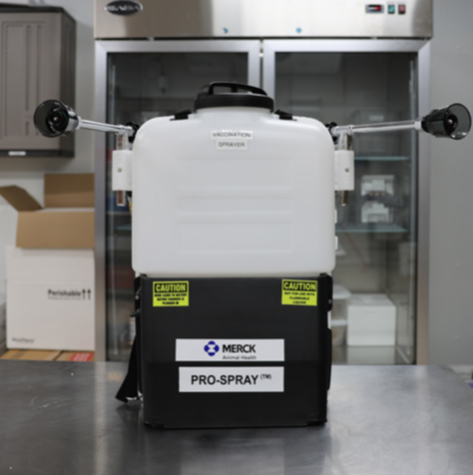
Figure 1. A designated sprayer.
Vaccine Handling and Biosecurity
Proper vaccine handling preserves efficacy and protects flock health. Vaccines must be stored in a dedicated refrigerator at 2–8 °C (35–46 °F), with minimum and maximum thermometers used to monitor temperature stability. During transport, vaccines should be maintained within this temperature range using insulated coolers and ice packs, ensuring that vials do not come into direct contact with the ice packs.
Cool distilled water below 20 °C (68 °F) should be used to prevent thermal degradation of vaccine potency. If distilled water is not available, the selected source must be free from pathogens, excessive minerals, and disinfectant residues. A vaccine stabilizer containing dye should always be added to the water before mixing the vaccine, as it maintains vaccine viability and allows visual confirmation of uniform coverage (Figure 2).
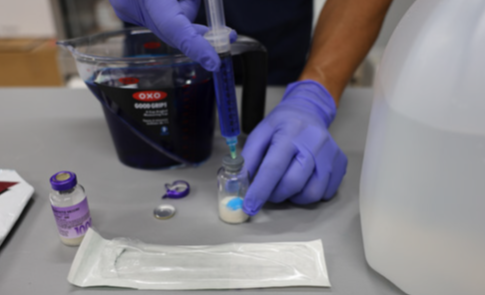
Figure 2. Transfer the stabilizer-dye solution into the vaccine vials.
Preparation must occur in a clean, biosecure environment using appropriate personal protective equipment, including disposable gloves, a mask or respirator, and safety glasses. The vaccine should be prepared for only one poultry house at a time to avoid confusion and maintain efficacy.
Vaccine Application
Environment plays a critical role during application. For environmentally controlled houses, lights should be dimmed before spraying to reduce bird movement. Ventilation and heating systems should be turned off and kept off for at least 10 minutes after spraying to allow the vaccine to settle properly.
In open-sided houses, side curtains should be closed and fans turned off during spraying and remain closed for 10 minutes afterward to minimize air movement and ensure even distribution.
Vaccines should be applied during the cooler period of the day, preferably in the early morning, especially during summer or in hot climates.
The sprayer lance should be held parallel to the ground, approximately 1 meter above the floor, directed toward one side of the house. Walking at a steady and consistent pace while spraying in a side-to-side sweeping motion ensures even coverage (Figure 3).
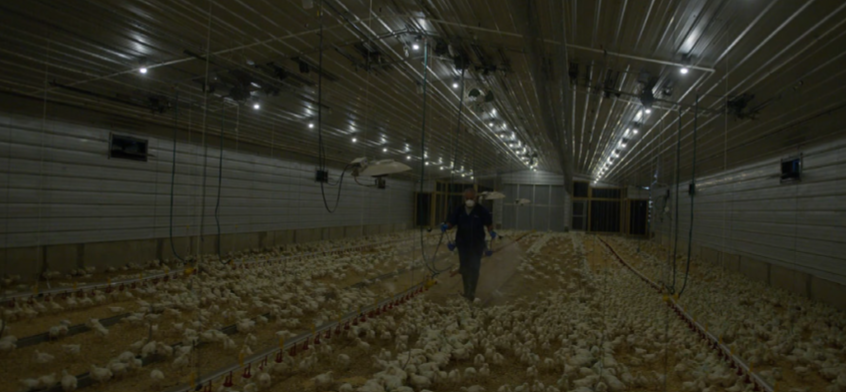
Figure 3. Hold the sprayer lance 1 m (3.3 ft) above ground, spraying parallel to the floor (Image courtesy of ANA Services and Training & Development Teams).
Post-Vaccination Actions and Validation
After a minimum of 10 minutes, environmental controls should be restored to normal operation.
All critical information, including vaccine type, manufacturer, lot number, expiration date, water volume used, and date of vaccination, should be documented.
Sprayers must be cleaned thoroughly using a rinse, alcohol disinfection, and final rinse process, then allowed to air dry before storage. Equipment should be charged, inspected, and stored in a clean, dry area until the next use.
Finally, the effectiveness of vaccination should be assessed using serological or molecular diagnostic methods to confirm an appropriate immune response.
Conclusion
Spray vaccination, when conducted with disciplined preparation, precise technique, and systematic validation, delivers uniform protection across the flock. By adhering closely to best practice principles, producers and partners can ensure consistent vaccine performance, support bird welfare, and maintain strong flock health outcomes.