





USSEC’s CrushCon 2025: Why quality, sustainability and reliability are defining U.S. Soy’s global advantage
From natural dry-down to verified sustainability, U.S. Soy leaders outline what sets U.S. Soybeans apart
 14 January 2026
 8 minute read
 By:
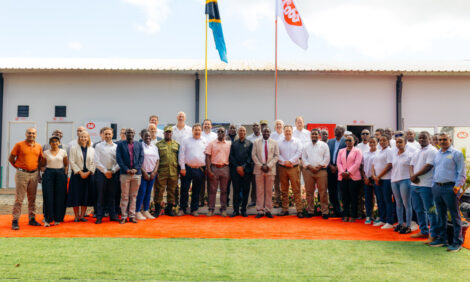
By: Jim Sutter, CEO of the U.S. Soybean Export Council (USSEC), and Susan Watkins, a soybean farmer from Virginia, USA and a member of the United Soybean Board, were recently interviewed by The Poultry Site's Sarah Mikesell at USSEC MENASA’s CrushCON event in Dubai, UAE.
Jim, given the rapid shifting trade and supply chain environment, how is U.S. Soy positioning itself to anticipate and manage volatility in key export markets?
We've seen a lot of volatility and a lot of changes. We're trying to pay attention to what all the options are as well as what's going on in all the markets. There are actually a few different elephants in the room, but one of them is the tariffs that came due on Liberation Day. We have tried to work with the countries that are now being challenged to bring their trade with the United States into a better balance and not have such a surplus.
One of the great things that they can import from the U.S. is U.S. Soy. We're working with several of those countries, as well as our U.S. trade negotiators, to be able to make sure that U.S. Soy gets written into those agreements and is seen as a solution for those countries.
We've seen some great things coming about. In November, we had an agreement signed in Bangladesh to purchase $1.25 billion of U.S. Soy, which is 2.5 times more than they purchased the previous year. We are really concentrating all of their purchases to U.S. Soy because of this balance of trade issue. It's a great way for them to be able to help solve that problem.
We're also continuing to look at diversification opportunities around the world with different markets and products. As people probably have heard, the U.S. Soy industry has ramped up its crush in the United States. That means there will be more soybean meal available. We're making sure that we're doing work in destinations where meal will be exported. We're extremely optimistic about the opportunities to continue to promote our high-quality, sustainable U.S. Soy in various markets around the world.
What specific strategies are U.S. Soy employing today to diversify its market exposure and reduce dependence on any single region or customer in light of market uncertainty and volatility?
We've seen lots of things happen that were unexpected. The China trade situation, caused us to lose the China market for numerous months. Various countries put several new rules in place that might close the door on imports. We do want a diverse set of markets where we're able to make sure that we have lots of choices where the soy produced by our farmers and exported by our exporters can go.
As for strategies, we're really trying to make sure that buyers of soy around the world understand what's different about U.S. Soy. It truly is different. U.S. Soy dries naturally in the field every fall. It isn't harvested wet and run through really high temperature wood fired boilers. This process causes damage to the nutritional capability or opportunity that soy provides to the animals.
Crude protein is a soy measurement that's been used for years. I have used it myself as an easy reference to look at the difference between soy from various origins. Crude protein is a hundred years old, and it's actually only measuring nitrogen and then multiplying it times a factor. We need to have better tools to measure nutritional value, and there are better tools.
USSEC is working together with the United Soybean Board and others to figure out how best to demonstrate to people how to really get the value of soy. Soybean meal is an expensive product; it's not a cheap commodity. We want to make sure people get the maximum value out of that product. That's an initiative that’s underway.
Another key effort for us is in the area of sustainability because we see the Millennials and the Gen Z consumers that are becoming much more important around the world. They care about sustainability. Some older people may say, “sustainability is not my deal.” The younger consumers are extremely focused on it.
We're able to demonstrate the sustainability of U.S. Soy. We have the U.S. Soy Sustainability Assurance Protocol or SSAP, which is a way that buyers can get a verification certificate about the sustainability of the soy that they're using. We have logo programs that they can enlist in, so they can put the Sustainable U.S. Soy logo on their product, whether they're in Japan, Colombia or Sri Lanka. In 21 countries around the world, there are over 1,100 products that carry the U.S. Soy or Fed with the sustainable U.S. Soy logo. It really is effective. We've heard from people that it has an influence.
Looking ahead three years, what are the top emerging risks for the U.S. Soy export sector and how is U.S. Soy proactively preparing the industry to respond?
We've always faced these risks. We just need to continue doing what we've been doing. We need to make sure we're diversifying our markets. We need to stick to our key strategic goals that we utilize as we market U.S. Soy – attain market access, differentiate U.S. Soy and build a preference for U.S. Soy.
We really just need to make sure that whatever markets we're going to, we are always thinking in the back of our mind, “what if that market closed?” We are trying to develop more markets.
Our exporters have lots of choices about where to sell their products and so we're not too dependent on any one market. I think 10 years ago, we became quite dependent upon China, for example, because it was growing so rapidly. It was so easy because they just kept buying and exporters weren’t going to say no to someone. We've seen what happened there, and we've tried to now make sure we have a lot more markets that our exporters can sell to.
Of course, the biggest risk I see is a global economic problem because soy enjoys continued demand growth every year. That's based upon global demand growing because of improved economies. People want to consume more protein and more cooking oil. Our biggest risk in my mind is if there were a global economic problem, we would probably see a slowdown in growth or, heaven forbid, a decline. There is not much we can do about that except to have lots of markets to sell U.S. Soy to and make sure we are the preferred soy in the world.
When things get tough, will people will still want to buy U.S. Soy because of the quality?
Because of the quality, this natural dry down, the great work that our U.S. Soy farmers do. It’s all about the quality and the sustainability of U.S. Soy.
Susan, what are the key differentiators that make U.S. Soy stands out for international customers?
We use a natural drying process. We produce one crop a year and we let it dry naturally in the field. In the meantime, we're also practicing a lot of conservation and sustainable practices on our farm and that does set us apart from others.
We tell our buyers that we are family farms and we take pride in what we do; we're generational and we want to keep it that way. We want to keep it in the families as long as we can. We do have a story to tell and we sell ourselves to sell our product. When people see it, they do see the value and the difference of U.S. Soy.
There's a misconception globally that that US farms are not farmer- owned – that producers or larger organizations may own a lot of US farms and that's just not the case.
No, it's not. I believe it's in the 90% range of farms are family-owned in the United States. Now, we may sell to big corporations, such as Bunge, ADM, Cargill or Perdue. As far as our family farms, that's our investment; that's our equipment. That's the farmland that we're planting, and we rent farmland as well. We keep it in the communities, and that's something that we impact as well. As soybean farmers, it's just not us. What we do and our livelihood affects our neighbors and communities.
With global competition increasing and customers facing variable supply and demand, how does choosing U.S. Soybeans help customers manage risk or uncertainty in their sourcing decisions?
It's the value of our U.S. Soy; it's a quality product. I think with our logistics and the way we raise our crop, we have the consistency and reliability to give them value every time they make their purchase.
When you buy a value-added crop like this, it's going to add value to your livestock or any type of production that you have. Whether it be animal feed or for human consumption, it's going to make that value go a long way.
Looking ahead three to five years, what emerging value propositions do you see for U.S. Soy customers?
We're going to need to stick to our conservation practices and get out that sustainable product. I think we're also going to bring in more technology. Just because I'm old-school, I may not adapt to it, but my son will and I think we're going to need that into the future to be competitive.
Every region of the United States that's growing soybeans may have different issues and may need their own sustainable practices.
Yes, and every year it changes. This year we had to do some replant because we had good planting conditions but once we put it in the ground, it turned cold and wet. We did not have a good stand, so we had to go back in and replant. There's always struggles every day when you're dealing with weather and Mother Nature. She is our silent partner and sometimes she doesn't play nice.

Sarah Mikesell
Sarah Mikesell grew up on a five-generation family farming operation in Ohio, USA, where her family still farms. She feels extraordinarily lucky to get to do what she loves - write about livestock and crop agriculture. You can find her on LinkedIn.