






Neglected Bacterium May be Pathogenic in Turkeys
US - Agricultural Research Service (ARS) scientists have shown that Bordetella hinzii may be causing severe disease in turkeys that had been attributed to another member of the Bordetella family. 19 June 2009
 1 minute read
Bordetella hinzii just may be the Eddie Haskell of avian bacteria. Like the notoriously sneaky character from the iconic 1950s television show 'Leave It to Beaver', B. hinzii has been causing trouble and dodging the blame.
Until recently, B. hinzii was believed to be non-pathogenic in poultry. But Agricultural Research Service (ARS) scientists have shown that the bacterium caused severe disease in turkeys that was attributed to another Bordetella species.
B. avium is a pathogenic bacterium that causes upper respiratory disease in poultry and wild birds. It is very similar to B. hinzii, and the two species are difficult to distinguish without using highly specific, DNA-based tests.
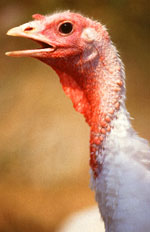
Scientists at the ARS National Animal Disease Center (NADC) in Ames, Iowa, used these tests to examine several Bordetella isolates, including some that had caused 100 per cent morbidity in turkey poults. Although the isolates had been labelled as B. avium, the scientists found that they were actually B. hinzii, flouting conventional wisdom that the bacterium could not cause disease in poultry.
B. hinzii has been found in poultry with respiratory disease, but was believed to be non-pathogenic because previous attempts to cause disease in chickens and turkeys with the bacterium have failed.
To test the bacterium's pathogenicity, NADC microbiologist, Karen Register, and veterinary medical officer, Robert Kunkle, selected six genetically distinct strains of B. hinzii and attempted to infect turkeys with them. Four of the strains were able to grow and persist in the trachea and also caused clinical disease. The strains varied in severity although none demonstrated 100 per cent morbidity.
This study showed for the first time that some strains of B. hinzii can cause disease in turkeys. The results of the study were published in the March 2009 issue of Avian Diseases.
In a related study with chickens, no birds developed clinical disease, suggesting that the pathogenicity of B. hinzii does not extend to chickens.
Now, NADC scientists are examining how the disease-causing strains of the bacterium differ. They are also working to identify virulence factors that influence disease development in turkey poults.
Further Reading
 |
- | Find out more information on turkey coryza (caused by B. avium) by clicking here. |