





10 years of excellence with C.H.I.C.K Program
C.H.I.C.K Program service develops hatchery operators and secures chicks' protection through qualitative day-old and in-ovo vaccinations
 9 October 2025
 5 minute read
 By:
By: Hatchery service created in 2012, the C.H.I.C.K Program celebrated a few months ago its 10 years of quality recognition by Bureau Veritas.
A worldwide independent third-party leader in testing, inspection and certification.
Included in the Ceva solutions, the C.H.I.C.K Program service aims at developing hatchery operators and securing chicks protection through qualitative day-old and in-ovo vaccinations.
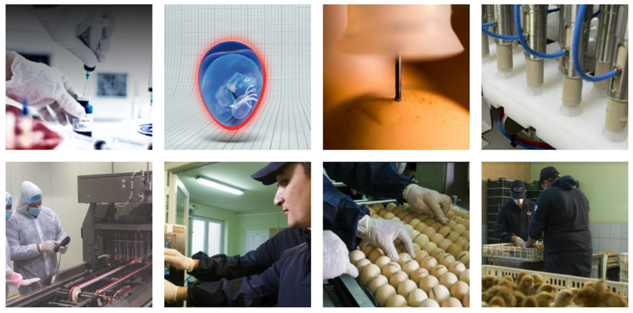
This service is supported by a unit of 200 experts who regularly visit hatcheries in more than 47 countries worldwide to assist, guide and strengthen hatchery vaccination best-practices (Fig.1).
Hatchery vaccination: the best option to protect
Nowadays, hatchery vaccination is commonly performed in hatcheries all over the world for its multiple benefits. Faster processes through mass application, control of the environment (humidity, temperature) thanks to modernized buildings. As well as protection from day 1, a key criterion when new strains challenge at youngest ages. But most of all, and contrary to drinking water vaccination, reduction of vaccination failure.
But despite its recognized and numerous advantages, hatchery vaccination remains complex. Due, among others, to all the factors implied at each step of the process.
Vaccine storage, then vaccine reconstitution and finally vaccine administration by in-ovo or subcutaneous route, if not spray or gel application.
3 procedures to master while dealing with other hatchery duties such as machines maintenance, egg storage, chick transportation, trolley disinfection or even hatch window (Fig.2).
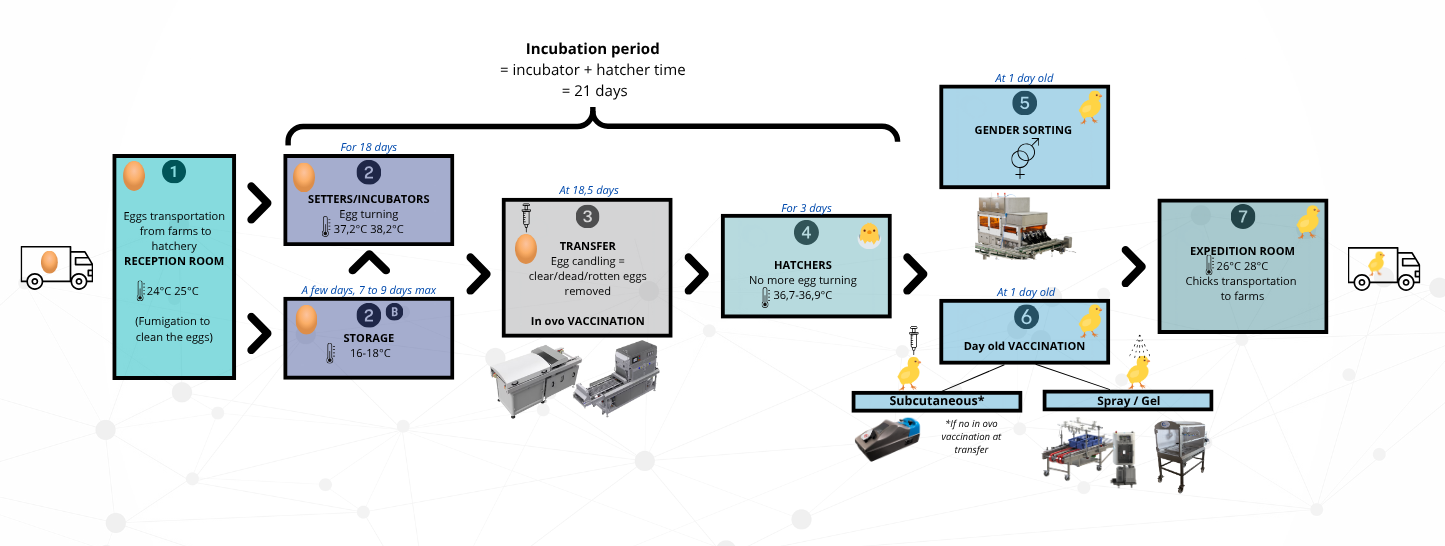
A lot of control points to check daily and in a regular way, for efficiency.
Hence the deployment of the C.H.I.C.K Program service, standing for Ceva Hatchery Immunization Control Keys. To tackle the field outbreaks still appearing even in vaccinated flocks. By working on the chick’s protection at the hatchery.
Hatchery experts for well-immunized chicks
Poultry vaccine manufacturers provide vaccines under different conservation forms, such as freeze-dried or frozen in liquid nitrogen. Therefore, before administrating the vaccine to the chicks, the very first step consist in their reconstitution.
Following the good vaccination practices (GVP), hatchery operators must reconstitute vaccines in a clean and controlled environment -the vaccine preparation room- and use them within 1 hour, for vaccine integrity and efficiency.
During hatch days, thousands of chicks' hatch. And according to the vaccination program put in place, diverse reconstitutions will be achieved. With or without thawing. A complexity to master which requires specific skills, while dealing with more often high employees’ turnover. Hence the need in the field for proper advisors, hatchery experts continuously checking and supporting the vaccination best-practices.
Hatchery automation and expertise
Once the vaccines reconstituted comes their administration. Carry out by hatchery machines. With or without operator’s support. Such as in-line machines, working totally independently, without stopping. Or cabinet sprayer and subcutaneous stand-alone equipment, both requiring an operator to vaccinate the birds.
In more automated hatcheries, in-ovo machines administrate vaccine at around 18.5 days embryo age. Allowing to reach higher speed. But some requirements are needed to go for such option: breeder flock and egg quality especially, among others.
Whatever the machine employed for the vaccine administration, preventive maintenance, proper settings, as well as daily cleaning and disinfection cycles are necessary.
This technical part, together with the operator’s continuous training, is included in the C.H.I.C.K Program service (Fig.1). To support the poultry production and its sustainability from the beginning. Where the objective is, within a few hours, to reach 100% well-vaccinated chicks. In other words, 100% chicks protected. Before sending them to farms, with several field challenges.
Vaccination success: everything matters
During the hatchery process, everything matters. Like the butterfly effect, small deviations or mistakes can lead to huge consequences.
A nozzle on a sprayer not working properly or a wrong machine pressure setting can easily reduce the vaccination success from 100% to 70%.
Same for a vaccine used for more than 1 hour, or a vaccine not properly reconstituted according to the GVP.
C.H.I.C.K Program, an international recognition
Included in Ceva solutions, the C.H.I.C.K Program service quickly demonstrated its benefits once launched.
Henceforth quality recognized for 10 years by Bureau Veritas, a third-party leader in testing, inspection and certification, this service continues to ensure vaccination best practices excellence through hatchery operators training, hatchery processes follow-up and vaccination efficiency (Fig.3).
A direct, regular and local support deployed in more than 65% of the hatcheries worldwide.
Which represents a consequent investment in terms of resources and time. For customer satisfaction and chicks’ protection.
A hatchery service for which the quality is recognized standardized at an international level, because every chick counts, everywhere in the world. To feed the populations. And support the poultry sustainability.
Connected C.H.I.C.K Program: real-time data
Ceva continues to innovate and look at the future with its Connected C.H.I.C.K Program: the initial C.H.I.C.K Program service, with connected machines and real-time data access (Fig.4).
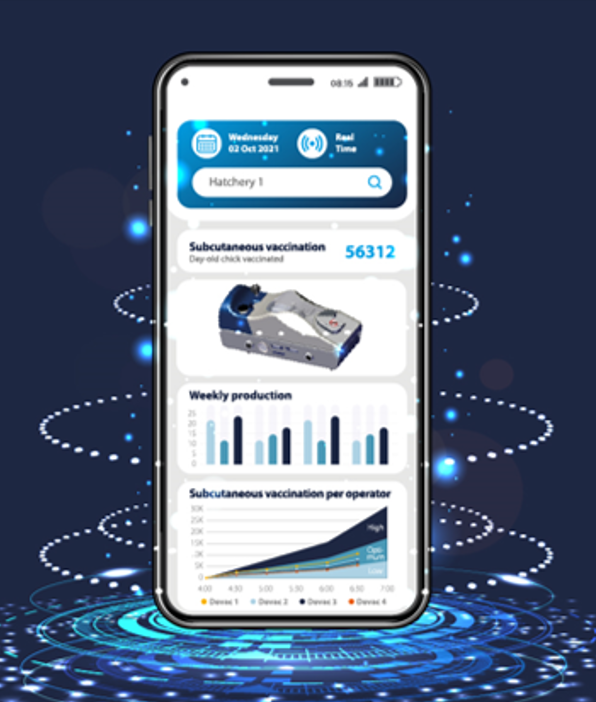
Allowing for the hatchery experts team in between regular presential visits to stay connected with their customers. For immediate assistance and better preventive maintenance.
The real-time data also opens a new dimension, offering remote access to the hatchery processes. To follow the key performance indicators such as the number of chicks vaccinated, the number of rotten eggs removed. Or the number of alarms raised during the day.
Thanks to the application, the hatchery manager will have the possibility to quickly put in place corrective actions. And better support his crew.
As well as an automatic recording for data analyses. To take fact-based decisions, investigate tendencies, look deeper into improvement opportunities or assess insights.
Ceva solution: a commitment to excellence in vaccination quality
While many similar hatchery services have been developed over the last decade, C.H.I.C.K Program remains the very first and only one quality recognized by an independent third party.
Part of any Ceva solutions, this hatchery service is complementary to the vaccines and hatchery machines proposed, for better and proven results.
Because even the best product won’t protect as expected if not well-applied.
With the Connected C.H.I.C.K Program, Ceva demonstrates its strong engagement in innovation and customer service for the poultry production and its sustainability worldwide.
Offering new capabilities and opportunities at the hatchery. To better guide and assist customers in their vaccination process, which remain complex and require high skill knowledges. For hatchery vaccination success.

Mathilde Lecoupeur
 3 July 2026
3
minute read
3 July 2026
3
minute read