





Inside Aviagen’s EMEAA Production Management School: Building knowledge, networks and future poultry professionals
Since 2012, the program has connected students to cutting-edge research, hands-on training, and lasting industry networks
 By:
By: When Aviagen launched the Europe, Middle East, Africa, and Asia (EMEAA) Production Management School Program in 2012, it did so with a clear mission: to connect poultry professionals with first-hand access to cutting-edge research, foster relationships across the industry and strengthen the next generation of poultry professionals. More than a decade later, the program has grown into a sought-after cornerstone of education, collaboration and innovation in the poultry sector.
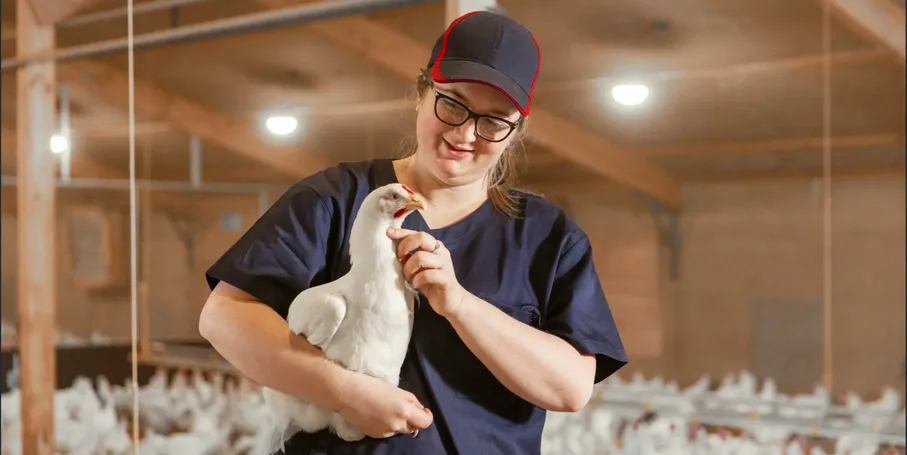
For Niamh Halley, Applied Investigative Technical Manager at Aviagen and director of the EMEAA School, the initiative represents a unique opportunity for attendees to gain direct insight into Aviagen’s breeding program, research and best practices while building long-lasting industry relationships.
“We want our School attendees to hear about progress made in our breeding program and what’s ahead as well as understand the newest developments in health, disease management and other topics. We want them to meet our team and know who to approach if they've got questions or require anything from us,” said Halley. “We also want to establish relationships with our customers and create an environment for the attendees to get to know each other and share what’s happening on their poultry farms.”
The EMEAA School program is built around three core modules: breeder, broiler and hatchery. The sessions are designed to give participants a comprehensive look at key stages of poultry production, supported by Aviagen’s depth of expertise.
“Previously, we've run modules on nutrition, ventilation and processing,” said Halley. “Plus we have an internal training module for our technical members that has a different structure but offers insights into the business for new technical members so they can get up to speed very quickly.”
Each module runs for a week, drawing on a diverse faculty of 35 to 40 tutors, reflecting both the technical breadth of the company and its commitment to sharing knowledge.
“Our commitment within Aviagen is reflected in the overall interest in our modules – our tutor team is always excited to meet the students, and we have a diverse pool of tutors that cover all the topics without having to go outside of Aviagen as well,” she said.
A modular approach to learning
Unlike Aviagen’s month-long North American program, the EMEAA school takes a modular approach. Participants can attend focused week-long sessions spaced throughout the year. The breeder and broiler modules are typically hosted in Edinburgh, Scotland while the hatchery module takes place in Budapest, Hungary. This format allows companies to send employees for specialized training with the least amount of disruption at their poultry facility.
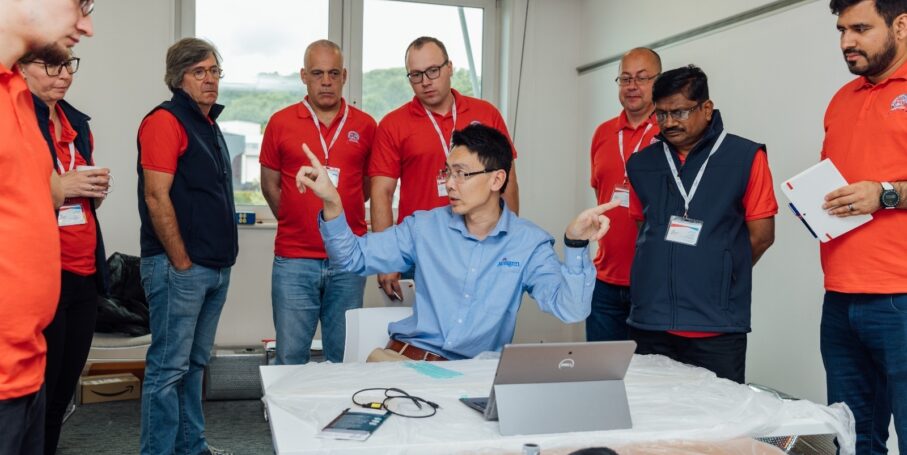
One of the things that sets these modules apart is the cross-disciplinary overlap.
“We encourage our students to think about the wider supply chain – for example, what impact do actions at the breeder level have on broilers,” Halley said. “We are always looking a step ahead and trying to make the curriculum a more rounded comprehensive program than just a standalone breeder or broiler or hatchery program.”
One specific area of focus is data collection and analysis.
“We have one full day dedicated to data because we can’t make proactive informed decisions if we're constantly reactive. This is more of a proactive element that guides attendees to see trends developing,” she explained. “We try to develop management skills by understanding what we've actually got happening on the ground. Then the students can take that information and begin to move forward and find solutions for a problem or areas that need improvement.”
Evolving with the industry
The School has evolved significantly since its founding. Originally centered on a case study approach, feedback from participants led to the introduction of more interactive workshops that allowed a cross-pollination of information and knowledge which challenged their current way of thinking.
“We know that the workshops allow for greater peer-to-peer learning,” she explained. “We've got a very unique situation in that we've got people from across this massive region – Europe, Middle East, Africa, and Asia – with similar challenges and opportunities. There is so much information they can share because a lot of stockmanship is universal.”
In 2023, Halley incorporated a new component – at registration attendees are asked to supply their top three issues for health, nutrition and ventilation. The goal is to keep the program dynamic and respond to real on-farm issues that challenge the industry. This approach challenges the tutors and ensures attendees are getting the most out of the program.
Another major innovation is the incorporation of technology to increase engagement.
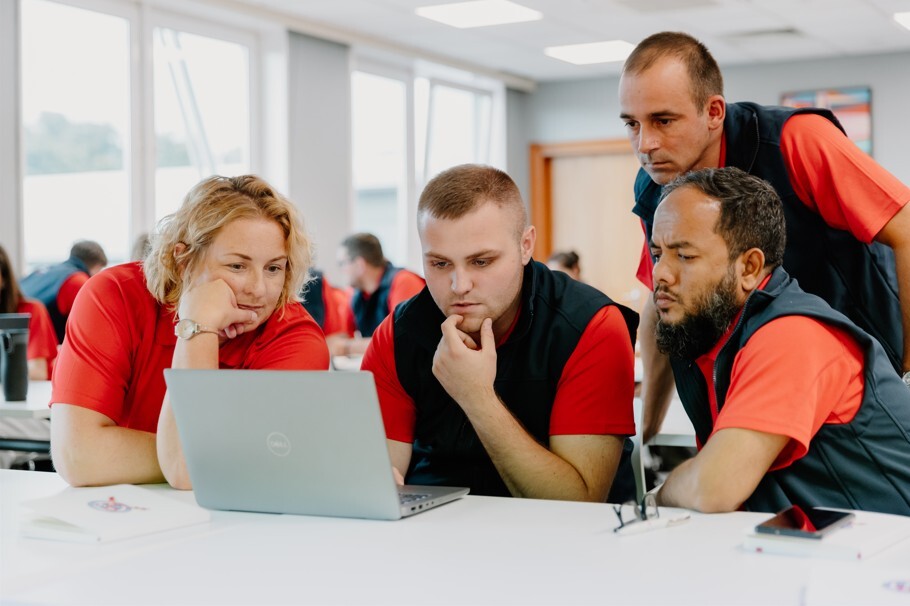
“Last year we also introduced Q&A sessions. We set up an online platform so the students can ask questions. At the beginning of the week, we see people can be quite shy and perhaps lacking confidence in their spoken English, we wanted to have a platform that helped with this. So we created a way they can submit questions, and we can answer them the next day. This component has allowed us to have dynamic discussions with the group, and sometimes attendees or our tutors offer solutions that go into practice.”
Staying ahead in a fast-changing industry
The poultry sector is evolving rapidly, and the EMEAA School helps participants stay on the cutting edge.
“The key thing is access to our tutors – participants have access to our R&D teams who are selecting health and performance traits for five years ahead, so they are experts in tracking industry trends. We give them firsthand access to an incredible group pf people,” Halley said. “On the other hand, our Aviagen team is taking in all the discussions from the participants who offer that boots-on-the-ground perspective of issues and challenges that they face, so it’s a great opportunity for everyone to learn from each other.”
Technology plays a role in the curriculum as well. The program includes a tutorial that serves as a short presentation on some of the newest technology in the industry, then they ask participants to share the top item that they have in their country and how it is benefiting the company or industry.
“The participants really like this session – everyone is doing their best to stay on top of what’s new out there, and this gives them a bit of an edge and certainly lots of information to share with their team when they get back to their home poultry operations.”
Measuring success beyond numbers
More than 1,300 professionals from 74 countries have attended the EMEAA School. While enrollment numbers are strong, Aviagen defines success in more human terms.
“In terms of measurable industry impact, it's quite difficult to measure something like the School because we've got such a wide audience,” Halley admitted. “But for us, success is seeing the attendees come together and work as teams and hearing how they've recommended the School to their peers. So many of our applicants know someone who attended.”
Word-of-mouth has fueled the vast pool of applications year after year. Companies repeatedly sending employees back is another testament to its impact.
“It's amazing that we've had people who have come back to retake the same module five or 10 years apart, and we've had people that have been to all three modules to ensure they keep up to date with the latest information and practices,” she said. “But it's also the fact that we are constantly oversubscribed for the program as well. A lot of companies repeatedly send their employees to the School, which I think is a credit that they find the school valuable for their people.”
While learning the same curriculum, each student has the opportunity to create their own individual experience and take away what’s really important for their role and operation. Students from the recent Breeder Module, held in August, describe their experience.
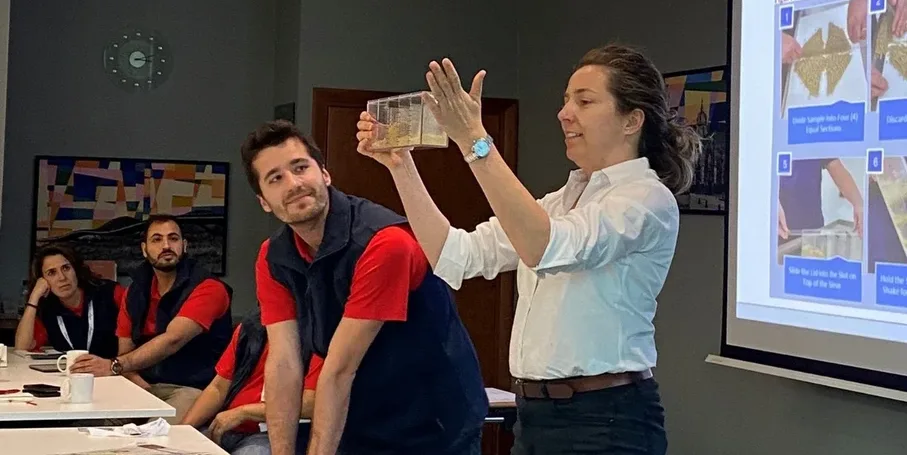
“The school is a unique experience. Unlike seminars, which often focus on the commercial side of the industry, the discussions here are much more open and centered on real problems and solutions as everyone is closely involved in day-to-day operations,” said student Noud Baetsen, Angel Eggs B.V. in the Netherlands.
“The whole setup of the program with over 30 countries represented in our module meant that we had a wide range of experiences shared from across the globe in one setting, giving us invaluable lessons to take back home. In addition, the fact that participants suggested topics shared by Aviagen specialists meant that all topics were extremely pertinent,” said Ricky Katongo, Hybrid Poultry Farm Ltd. in Zambia.
“The best part of the group was the field discussions. Listening to teammates and considering their perspectives gave me valuable insights for the future. As a manager, it’s easy to overlook others’ views, but engaging with international colleagues provided me with fresh ideas and a broader outlook,” said Tariq Al Hassan, Al Jazeera Agriculture Co. in Jordan.
Building community and recognition
Networking is a central pillar of the program.
“I think the networking aspect is so important. It's so nice when you start the week and everybody's kind of shy – like the first day of school – and by Friday, this group of people are all friends and are setting up WhatsApp groups so they can stay in touch,” Halley said.
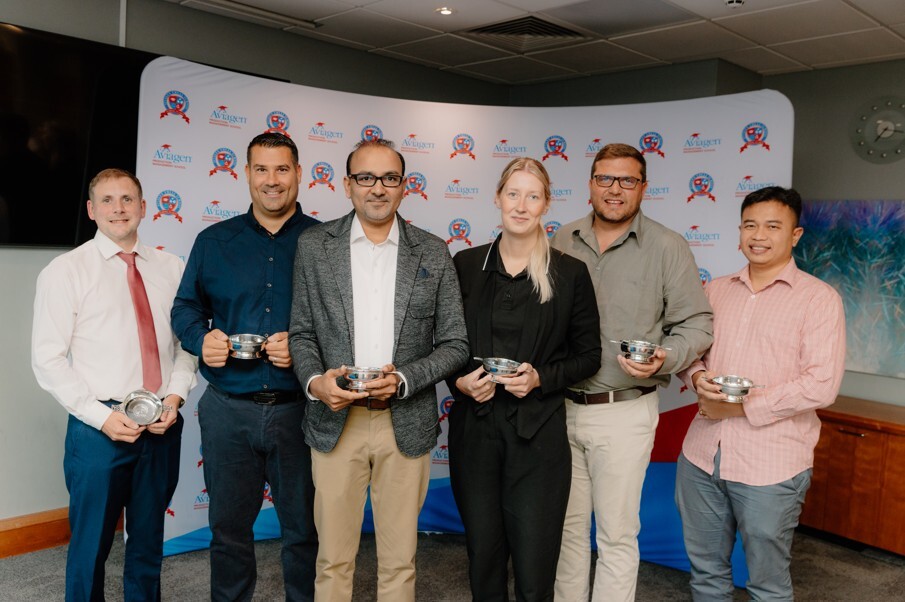
To reinforce collaboration, each module includes team competitions and awards. The David Butler Award, named after a pioneering industry leader, recognizes individuals with exceptional promise.
“What we're trying to recognize with the David Butler Award is someone who has a bright future in the industry. It's not age restricted, but it's someone who has really contributed. They've networked. They've made the most of their time. They're going to go home and move mountains with their newfound knowledge,” Halley explained.
Sustainability and the next generation
The program also aligns with Aviagen’s sustainability goals. One of Aviagen’s School goals is to make sure that attendees walk away with best practice management, and that they're able to manage their birds to optimize productivity while maintaining health and welfare.
“As part of social sustainability, education of the next generation of poultry leaders is extremely important. The poultry industry is not always seen as an attractive sector. What we do through the schools often works to get some younger people involved in the industry and to keep all ages engaged in poultry excited about feeding the world and providing a sustainable protein source like chicken,” said Halley.
The knowledge exchange continues
Ultimately, the EMEAA school has become more than a training program – it is a community, a catalyst for innovation and a bridge between generations in the poultry industry. With modules continuing annually in April, August and November, and a curriculum that evolves with participant feedback, Aviagen has built a model of education that reflects the fast-paced, global and interconnected nature of poultry production.
Or as Halley puts it simply: “We hope they walk away with knowledge, but I think the networking aspect is so important. The attendees’ connections continue long after the weeklong module, and the knowledge exchange continues too. So, that’s actually the best part of the program.”


Sarah Mikesell
Sarah Mikesell grew up on a five-generation family farming operation in Ohio, USA, where her family still farms. She feels extraordinarily lucky to get to do what she loves - write about livestock and crop agriculture. You can find her on LinkedIn.
 3 July 2026
 3
minute read
3
minute read