




IPPE: From mixing room to chick – optimizing every step of hatchery vaccination
Zoetis’ Brian Jordan explains why process evaluations are critical to protecting vaccine efficacy and bird health
 21 July 2026
 4 minute read
 By:
By: Part of Series:
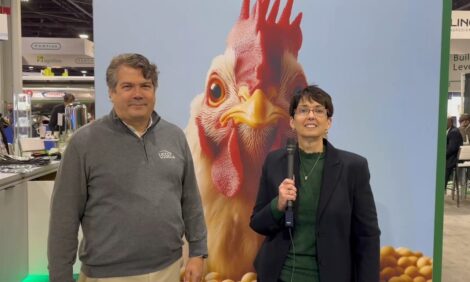
Dr. Brian Jordan, Head of Technical and Diagnostic Services at Zoetis, was interviewed by The Poultry Site’s Sarah Mikesell at IPPE 2026 in Atlanta, Georgia, USA.
Zoetis has conducted process evaluations for in ovo vaccination for decades. For those who are unfamiliar with Zoetis process evaluations, what do they entail?
A process evaluation is exactly what it sounds. We come in and walk through the entire process of vaccination for our Embrex® devices. That process begins in the mixing room, and we evaluate things like:
- Vaccine temperature
- Vaccine holding
- Vaccine mixing
- How long is the vaccine sit at room temperature on the processing floor?
- How does the vaccine move through the machine?
The machine is a very technologically advanced piece of equipment that touches every egg and delivery vaccination to every egg. The process evaluations are Zoetis’ way of supporting our customers to ensure that the vaccine is effectively administered to each bird and able to induce a good immune response.
What led Zoetis to expand the service from Embrex in ovo technology to include spray cabinet vaccination?
The vaccines that go through our Embrex devices have been the most recent technological advancement for vaccine technology in the poultry industry. But there are many vaccines that do not go through an Embrex device for in ovo vaccination. Those vaccines typically get applied in the hatchery on the day of hatch, usually by spray cabinet vaccination.
For the broiler industry, almost all vaccines are applied in the hatchery and only then. So, it's critical that we also evaluate the other places in the hatchery, particularly the spray cabinet, where these vaccines are applied. This helps ensure that the money our customers are investing in vaccines is not wasted and the birds can be protected.
Why is it valuable for hatcheries to have an independent review from a Zoetis hatchery specialist when evaluating vaccination processes, particularly for spray vaccination?
With most integrated companies, they're not using just one company's products. Having someone who may not be vested in the product itself come and review equipment helps ensure an unbiased evaluation. We look at the process itself, the machinery and equipment and follow a very strict checklist that isn't going to be influenced by specific product usage.
Vaccine handling and mixing best practices are often emphasized for in ovo vaccination. What are some common challenges you see with vaccination handling and mixing for spray vaccination and why do these steps matter so much for chick health and immune response?
One of the important things that we have to remember about vaccines that are applied via spray cabinets in the hatchery is that they are all live attenuated pathogens. They started out as a pathogenic organism isolated from sick birds. They were brought into the lab and attenuated, so they won't cause clinical disease any longer, But they are still live organisms which means that if we don't handle them correctly, we can destroy them.
If they’re destroyed before they get into the birds, they cannot induce an immune response, making them ineffective. Understanding that some of these organisms, like viruses, are very stable at cold temperatures but are not stable at hot temperatures. Other organisms like coccidia are the opposite – they're more stable in warmer environments than they are in colder environments.
Understanding this and creating an environment where they can survive is critical for mixing and handling practices. We want to ensure we don't inadvertently deactivate or inactivate the vaccines before we even have a chance to get them to the chicks to induce an immune response.
I've heard veterinarians presenting before and they stress the importance of not killing the vaccine. If the vaccine doesn’t survive, is it completely ineffective?
If the vaccine is destroyed, it is a waste of money. Hatcheries are investing a lot of money in these products and it's not just the cost of the vaccine itself. It involves lost revenue from the birds that are no longer protected and vulnerable to disease. Revenue is lost when those birds can’t go to processing.
How can hatcheries know if they're doing a good job with spray cabinet vaccination?
There are a few simple steps that we go through with hatcheries in our spray application process evaluation that they can use and go through on a daily basis.
At startup every day, there are several factors that should be monitored in the spray cabinet.
- Ensure that your application volume is correct based on your dosing
- Ensure dosing is consistent from day to day
- Check that the nozzles are in good condition. Nozzles turn the liquid vaccine into droplets that get sprayed onto the chicks, and nozzles can get blocked or corroded if they aren’t changed regularly. This also influences the livability of the vaccines.
- Evaluate spray coverage. We provide our customers with a plexiglass quality control plate that they can use to move through their spray cabinet and evaluate spray coverage front to back, side to side.
- Monitor droplet size and make sure to achieve a nice coarse droplet.
- Be sure to spot check the machine to make sure that it's operating correctly.
There are so many things to keep in mind when vaccinating the flock. Is this a big challenge for producers?
Producers know that repetition breeds consistency. But over time, a repetitive process may breed complacency. Producers sometimes assume that they’ve “got it down” and may ignore small mistakes that occur, which can dramatically influence that set of birds that's getting vaccinated.
NA-04406