




Lessons from Europe’s adoption of gender identification technology
For Pondex S.A.U., WingScan improved animal welfare by minimizing chick handling and lowering disease risk.
 20 May 2026
 2 minute read
 By:
By: The once manual task of broiler sexing is being automated at scale, allowing producers to optimize feed strategies, promote uniform flock growth, and strengthen efficiency across the value chain. While widely recognised as a beneficial practice around the world, manual sexing demands a large labour force, with human error and fatigue impacting accuracy and consistency. These challenges have accelerated the shift toward automated systems, which are reshaping the production chain and setting a new benchmark for throughput.
Automation in Europe
Across Europe, automated sexing is transitioning from an emerging innovation to a new operational norm. Driven by pressure to reduce labour dependency, strengthen production efficiency, and improve welfare, hatcheries are turning to technologies capable of sexing chicks at scale with high accuracy.
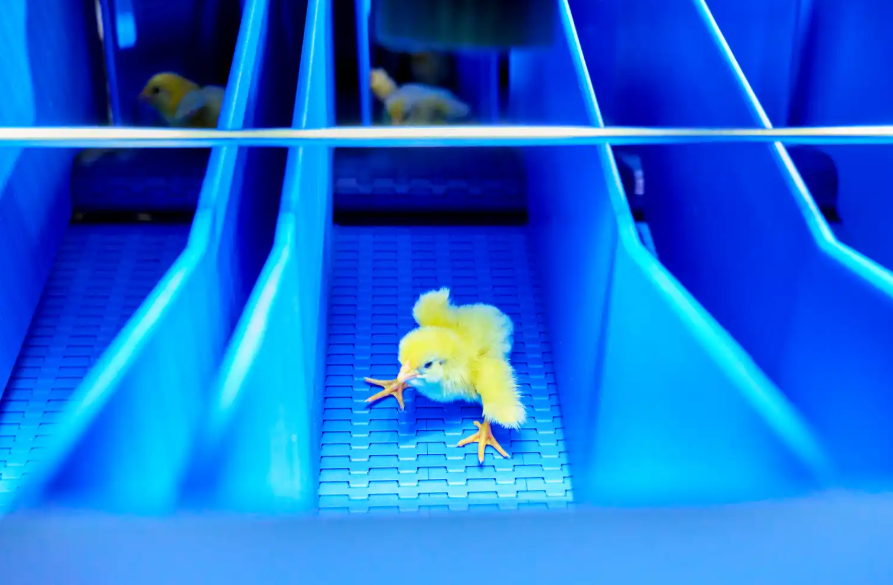
As producers prioritize welfare compliance and data‑driven production, automated sexing is becoming a strategic investment for hatcheries seeking resilience, consistency and long‑term competitiveness. For two producers in Spain – Pondex S.A.U. and Ramil Avícola – this shift has already delivered powerful results.
Spain’s operational pain points
For Pondex S.A.U., a subsidiary of Spain’s Vall Companys Group, the limitations of manual sexing became increasingly difficult to manage. The process was time-consuming, physically demanding, and carried biosecurity risks. Productivity was hindered by long execution times, while complex training required stable teams to deliver consistent results.
Ramil Avícola faced similar pressures. The family-owned hatchery struggled with workforce instability, space constraints and capacity limitations at its site in Galicia. Manual sexing had become a bottleneck, preventing the hatchery from operating at full capacity. The work was carried out by a part-time team, and inconsistent attendance meant throughput varied significantly from hatch to hatch.

Pondex’s Hatchery Director, Jose Miguel Garcia Sanchez
In 2025, these challenges prompted both producers to partner with international AgTech company TARGAN to adopt WingScan™, a fully automated and modular sexing system using advanced AI-powered imaging technology. Capable of sexing up to 160,000 chicks per hour, the system dramatically increases throughput.
The results
For Pondex S.A.U., WingScan improved animal welfare by minimizing chick handling and lowering disease risk. With advanced monitoring and a data dashboard, the system enhanced traceability and process control, making every stage of production more transparent and reliable. Reflecting on the implementation, Pondex’s Hatchery Director, Jose Miguel Garcia Sanchez, said: “WingScan has granted us agility and strength in responding to the needs of our integrators, while also giving us peace of mind and security that the product we send to farms meets customer requirements.”
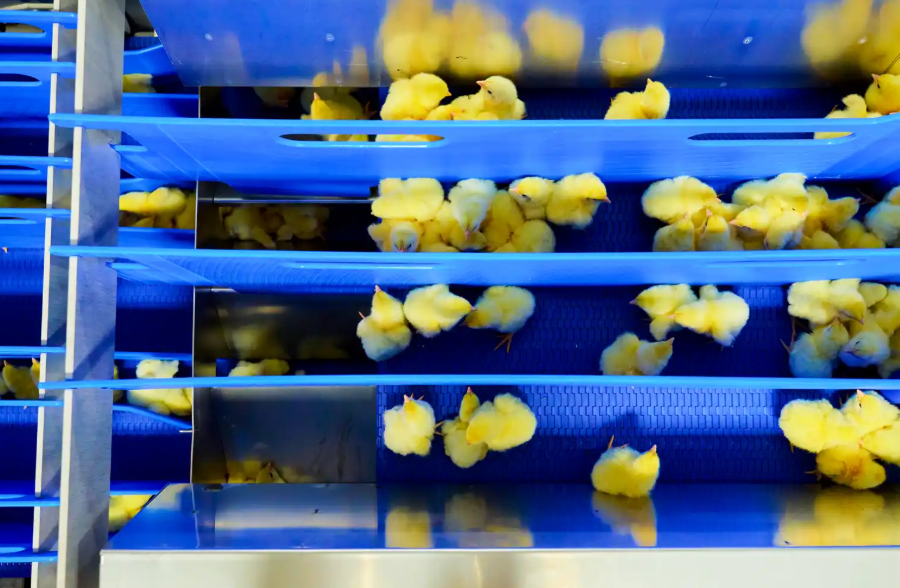
For Ramil Avícola, WingScan increased weekly sexing capacity, enabling the hatchery to meet client demand. The system eliminated reliance on a large part‑time workforce and allowed hatchery space to be utilised more effectively, reducing operational instability and smoothing workflows. It also delivered a clear improvement in sexing accuracy, providing precise results that meet customer expectations for reliably sexed chicks.
For both producers navigating Spain’s challenging job market, WingScan has provided the assurance of an automated solution that delivers consistent performance and long‑term reliability.
Next steps for the industry
The results seen across Spain demonstrate a clear path forward for hatcheries worldwide. Labour shortages, welfare expectations, and operational stability are key priorities across the global poultry sector, including many of the world’s leading producing and exporting markets.
As producers look for ways to stay ahead in a rapidly modernising global poultry landscape, the timing for automation has never been more critical. Systems delivering practical, scalable solutions are becoming essential for unlocking the performance needed to remain competitive. Producers can now mirror the success of hatcheries like Pondex S.A.U. and Ramil Avícola by embracing technologies that deliver measurable, long-term value.