





New indicators for monitoring success in pullet rearing
Healthy pullets – The foundation of productive laying hens 11 June 2025
 5 minute read
 By:
By: Advancements in genetics have significantly improved the productivity of laying hens in recent years. Modern breeds are very efficient and early-maturing birds, demonstrating impressive laying performance, high persistency and outstanding feed efficiency. However, this enhanced productivity has also raised higher requirements for proper flock management.
Pullet growth during the rearing period – the first 17 to 18 weeks of age – is crucial for ensuring laying hens to reach their full potential during the production period (earlier peak of lay and better laying persistency). Key indicators of pullet quality include bird conformation (body weight, distribution of muscle and fat mass, crop development) and uniformity within the flock. Achieving these criteria requires a strong focus on gut health, bird immunity and skeletal development.
Healthy gut for healthy and productive birds
Gut health is essential for achieving the full production potential of layers - as it plays a key role both for nutrient digestion and absorption, and for maintaining a robust immune system. Supporting gut health in a targeted way can enhance the bird’s resilience to pathogens and environmental stressors such as dietary changes, heat stress or vaccines like those for coccidiosis, where the re-ingestion of feces is part of the immunization process.

Promoting a healthy gut environment, including a balanced microbiota, is therefore crucial. Optimal intestinal health depends on proper feeding, hygiene, biosecurity, and good flock management. Prioritizing technologies and practices supporting animal health is essential, as gut microbiota imbalances or broader health disruption frequently require a veterinary intervention and medical treatment.
Probiotics are effective nutritional solutions to support a balanced and healthy intestinal microbiota - by promoting population of beneficial bacteria, enhancing immune responses, and improving nutrient utilization.
For instance, the probiotic Pediococcus acidilactici CNCM I-4622 (BACTOCELL) can use complex carbohydrates from the feed as a substrate to produce (L+) lactic acid. By lowering the pH locally, this (L+) lactic acid helps reduce the risk of infection from pathogens, e.g. E. coli, C. perfringens, or Salmonella, while providing additional source of energy for the birds.
Breast muscle thickness – Key indicator of skeletal development and keel bone integrity
Recent studies suggest that measuring body weight alone is not sufficient to assess properly pullet development. Particular attention must be given to the development of the breast muscle (pectoralis major and minor). Well-developed breast muscle helps reduce the risk of keel bone damage. Furthermore, muscle development and protein retention are important in maintaining the persistency of the laying curve (Vignale et al., 2018).
A link has also been established between reduced egg quality and susceptibility to keel bone fractures (Riber et al., 2018). Egg production requires the hen to mobilize its own body reserves: proteins from breast muscle tissue for egg protein synthesis (Lake, 2014) and minerals (Ca, P) from skeletal bones for eggshell formation (Alfonso-Carrillo et al., 2021). Breast muscle development, body composition (fat vs protein), bone mineralization status, laying performance and egg/eggshell quality are therefore closely interconnected.

Figure 1: Breast Muscle Scoring - Laying hens with good muscle development are better able to maintain high egg production (Source: Genetic Guidelines for Commercial Layers, 2018)
The combination of both keel bone and breast muscle scoring (i.e. body condition score – Figure 1) can be a useful tool to assess bird body reserves (Gregory and Robins, 1998). Investigating breast muscle and bone status is even more important as recent selection for improved laying performance may negatively influence keel bone health (Eusemann et al., 2020).
As with intestinal health, nutrition and flock management are key determinants of both muscle and skeletal development. Feeding strategies must be tailored to meet the bird’s nutrient requirements. Beyond the core nutrients like protein and energy, an adequate supply of minerals and vitamins is essential. Calcium, in particular, is crucial in the bone metabolism. Recent studies indicate that probiotics such as Pediococcus acidilactici CNCM I-4622 (BACTOCELL) can support bone turn-over and muscle development by enhancing calcium metabolism.
Benefits of probiotic supplementation on pullet growth - field trial
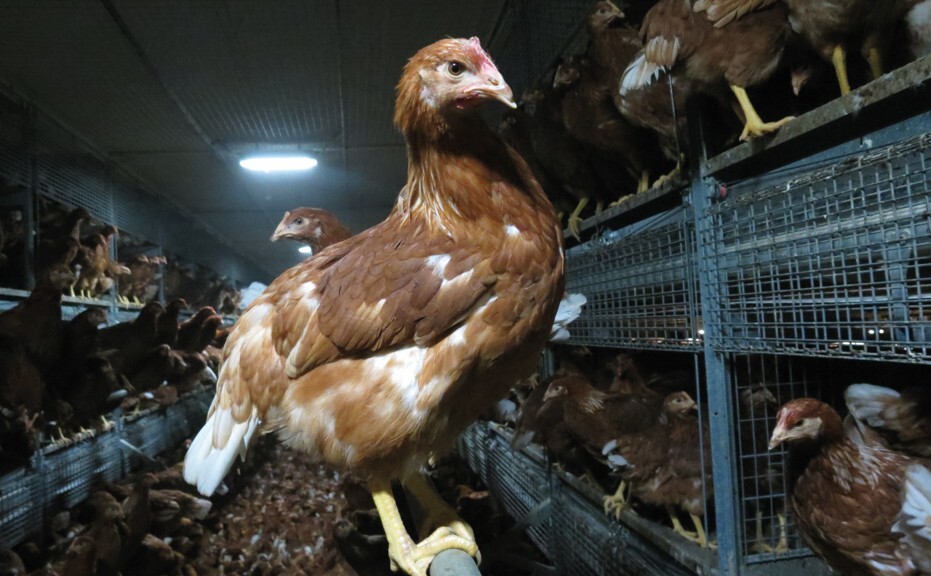
In a field study, pectoralis muscle thickness was used as an indicator to evaluate pullet quality. 30,000 Novogen Brown pullets were housed in two identical rooms (Control and Probiotic) within the same house. All pullets were fed a standard commercial organic feed, whereby the probiotic Pediococcus acidilactici CNCM I-4622 (BACTOCELL) was added to the diet fed to the treatment group (Probiotic) at 1x10⁹CFU per kg of feed, from 1 to 15 weeks of age.
Body weight was evaluated using an automated weighing system and mortality was recorded daily. Additionally, breast muscle thickness was measured on day 99 (week 14) using an ultrasound device. The birds could be monitored up to 32 weeks of age to track the onset of lay.
The inclusion of BACTOCELL in the diet throughout the pullet rearing phase led to higher performance – FCR improved by 6 points (3.87 vs 3.93 for control) – and a better flock uniformity, reaching 87% vs 83% for the control group. Mortality dropped from 3.1% in the control group to 0.9% in the probiotic group, showing the benefits of BACTOCELL supplementation on pullet health (Figure 2).
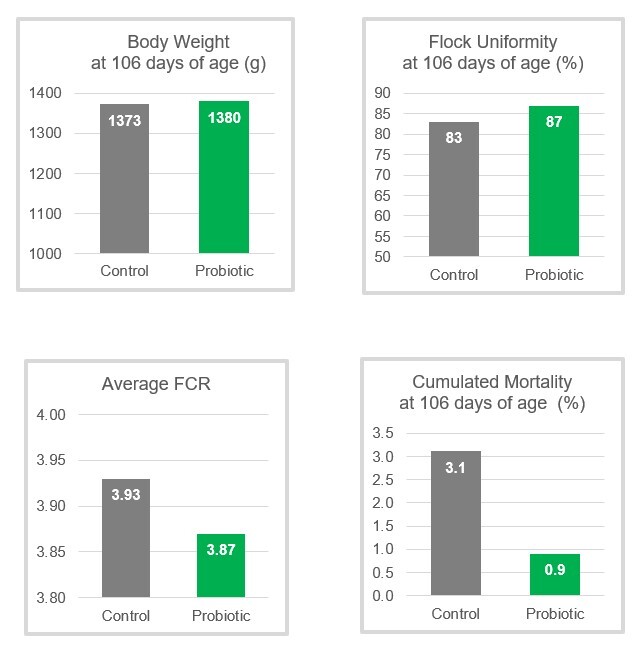
Figure 2: Pediococcus acidilactici CNCM I-4622 supplementation in Pullet Feed: Benefits on Flock Performance and Uniformity (Soler et al., 2023)
Average pectoralis muscle thickness was significantly improved in the probiotic group, with 13.3mm (±2.6) vs 9.4mm (± 1.5) for the control birds (P<0.01, Figure 3). These results are consistent with previous observations in laying hens, where the use of Pediococcus acidilactici CNCM I-4622 enhanced pectoralis muscle thickness. In addition, the proportion of hens with intact keel bone was higher in the probiotic-fed group (50% vs 15% in the control group).
When deviations or fractures were observed, their severity was noticeably reduced in the probiotic-fed group compared with the control group (severe deviation/fracture: 0% vs. 25%; moderate: 10% vs. 35%; slight: 40% vs. 25%; Lallemand internal data, 2024).
These current data support previous observations of improved bone resistance and a more efficient mineralization process (blood Ca, P, osteocalcin and calcitriol concentrations) associated with improved keel bone morphology and integrity in hens supplemented with the probiotic strain Pediococcus acidilactici CNCM I-4622 (Allain et al., 2024; Kim et al., 2022).
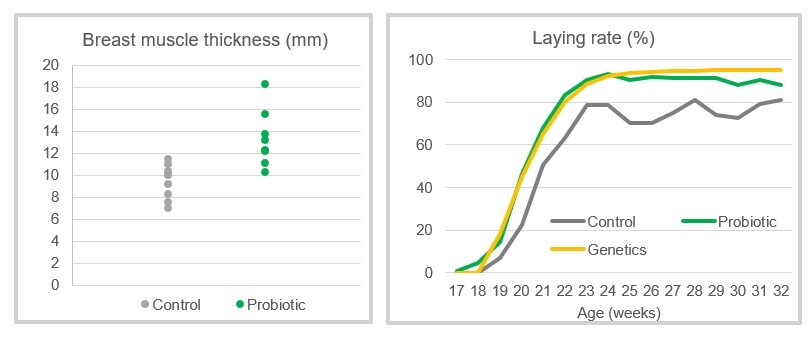
Figure 3: The use of the probiotic Pediococcus acidilactici CNCM I-4622 in pullet feed promoted breast muscle development and a better onset of lay (Soler et al., 2023)
Layers supplemented with BACTOCELL throughout the pullet rearing phase showed a better onset of lay, performing close to their genetic potential. In contrast, the control birds remained significantly below their genetic potential at the onset of lay (Figure 3).
Takeaway
Successful pullet rearing is fundamental to the long-term performance and health of laying hens. In addition to the established methods used to monitor pullet rearing success, assessing breast muscle thickness offers a valuable innovative indicator. Supplementing pullets with Pediococcus acidilactici CNCM I-4622 (BACTOCELL) during the rearing period appears to be a strategic and efficient way to optimize pullet growth (i.e. muscle and skeletal development) and therefore secure laying hen performance and egg quality throughout the laying cycle.
References available upon request
Not all products are available in all markets nor associated claims allowed in all regions.