





Pre-processing management procedures and recommendations for broiler chickens
Taken from Arbor Acres, Indian River and Ross Broiler Handbooks 2025 By:
By: *Editors note: The following is an abbreviated version of Section 4 Pre-Processing Management of the Aviagen Broiler Handbooks 2025
Download the 2025 Broiler Management Handbooks here:
Preparation for catching
Best practices for the final stage of broiler production, emphasizing optimal bird condition at processing to meet quality and welfare standards.
Here we highlight the importance of coordinated management across growing, catching, and processing phases.
Key focus areas include:
-
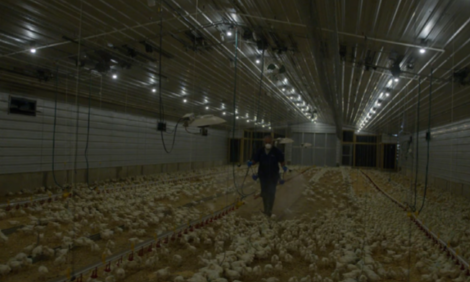
Lighting: Return to 23-hour light schedules at least 3 days before catching to maintain feeding activity and promote gastrointestinal (GIT) emptying.
-
Feed Withdrawal: Begin feed removal 8–12 hours prior to processing, balancing GIT clearance and minimal weight loss, while ensuring continuous water access. Poorly timed withdrawal increases contamination risks or economic loss through reduced yield.
-
Feeding Patterns: Maintain stable feeding routines pre-withdrawal. Disruptions can lead to uneven GIT emptying and weight loss.
-
Monitoring: Use visual checks for signs of improper feed withdrawal, such as watery droppings or undigested feed at processing.
-
Water Access: Ensure free access to water until catching to prevent dehydration and aid digestion.
-
Pharmaceuticals: Adhere strictly to withdrawal periods for any medications to ensure residue-free meat.
Overall, precise control of environmental, nutritional, and health factors in the final phase ensures food safety, carcass quality, and animal welfare.
Key points:
- Allow 3 days on 23 hours of light and 1 hour of dark prior to catching.
- Correct timing of feed removal from the birds ensures that the digestive tract is empty before processing commences.
- Monitor and review feed withdrawal plans regularly.
- Remove whole grain from the ration 2 days before processing.
- Delay the removal of drinkers until catching time.
- Follow statutory withdrawal periods for pharmaceutical products.
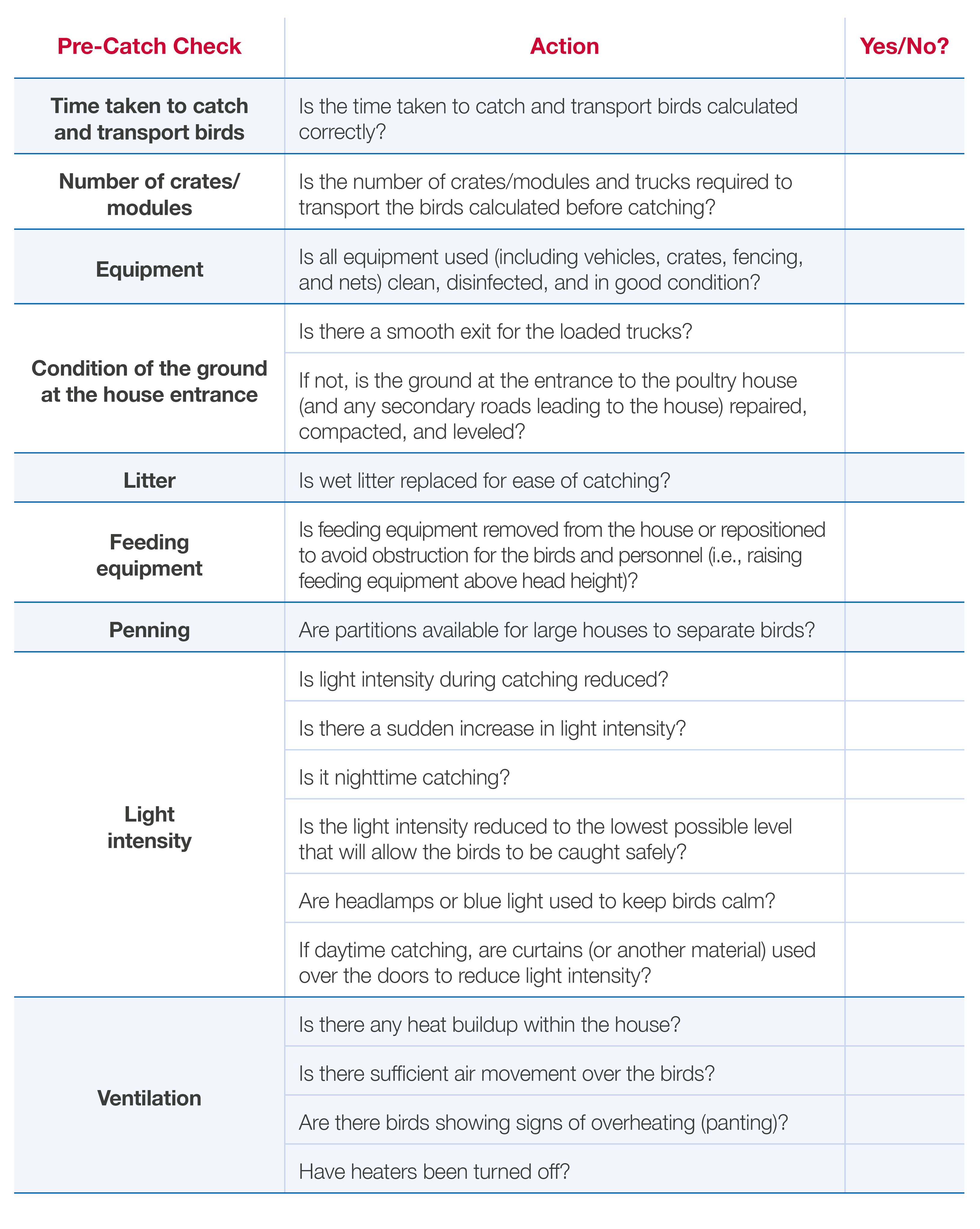
Pre-catch checklist
Catching
This section emphasizes the critical role of careful bird handling during catching and thinning in minimizing injuries and ensuring processing quality. Poor practices at this stage can lead to carcass downgrading due to bruising, scratches, or wing damage.
Ideal environmental conditions
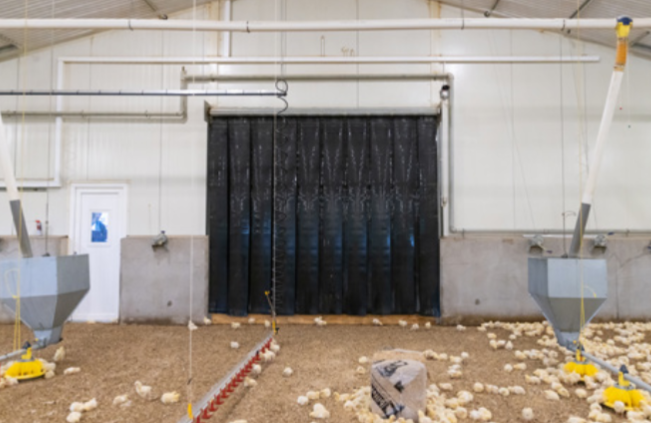
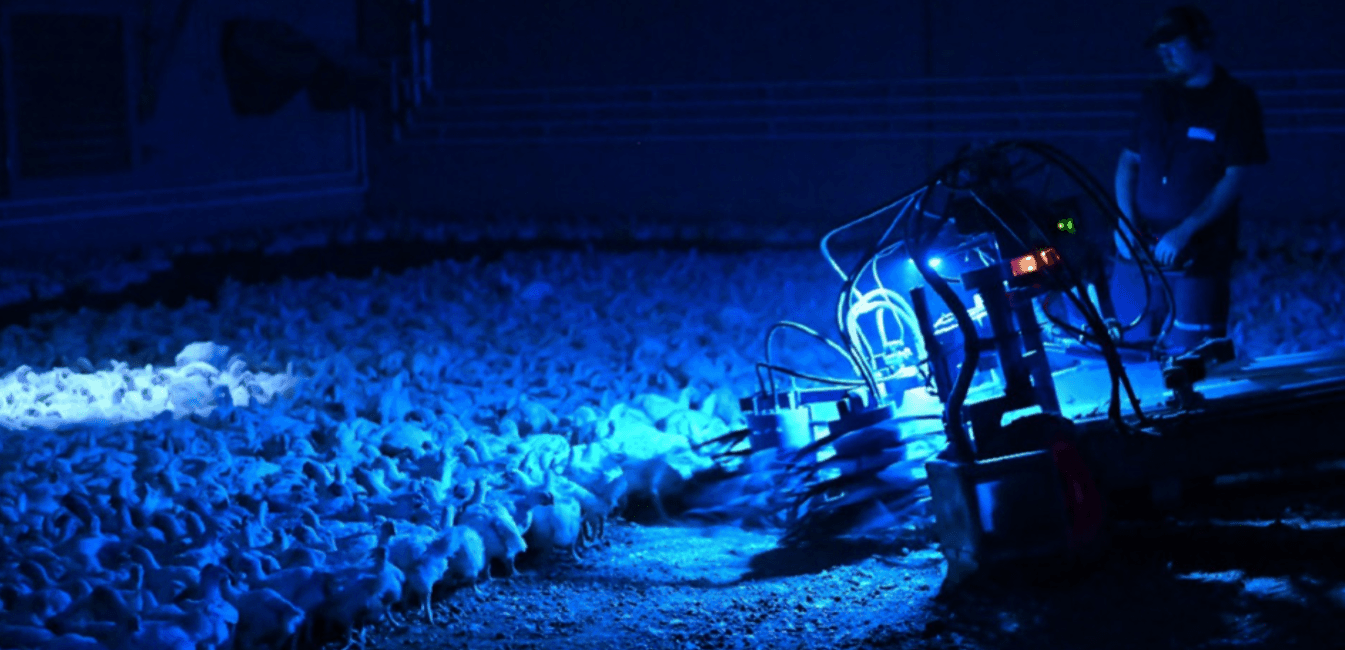
Catching must be well planned and executed by trained personnel to prioritize bird welfare. Calming techniques, such as low lighting or blue light, reduce stress and injury. Unfit birds must be excluded from transport. Effective ventilation is essential during catching to maintain temperatures between 16–18°C (60.8–64.4°F) and prevent heat stress or chilling. Overheating risks are minimized by turning off heaters and avoiding wind chill.
Thinning/partial depletion
Thinning operations must maintain proper conditions for both removed and remaining birds. Feed should be withdrawn for a limited time (per regulations), while water remains accessible. Sudden refeeding post-thinning can disrupt digestion and lead to gut health issues. Ventilation, temperature, and lighting must be adjusted to encourage even distribution of remaining birds and avoid stress.
All equipment must be thoroughly cleaned and disinfected before entering the house to uphold biosecurity and prevent disease transmission.
Catch
Effective broiler catching is essential to minimize bird injury and maintain carcass quality. Only birds fit for transport should be caught, and bird handling must be calm and controlled to avoid stress, bruising, wing damage, or internal injuries.
Manual Catching
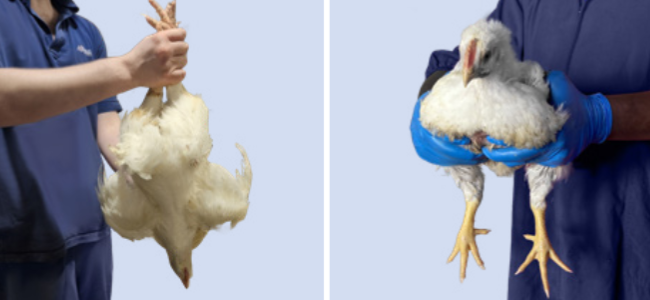
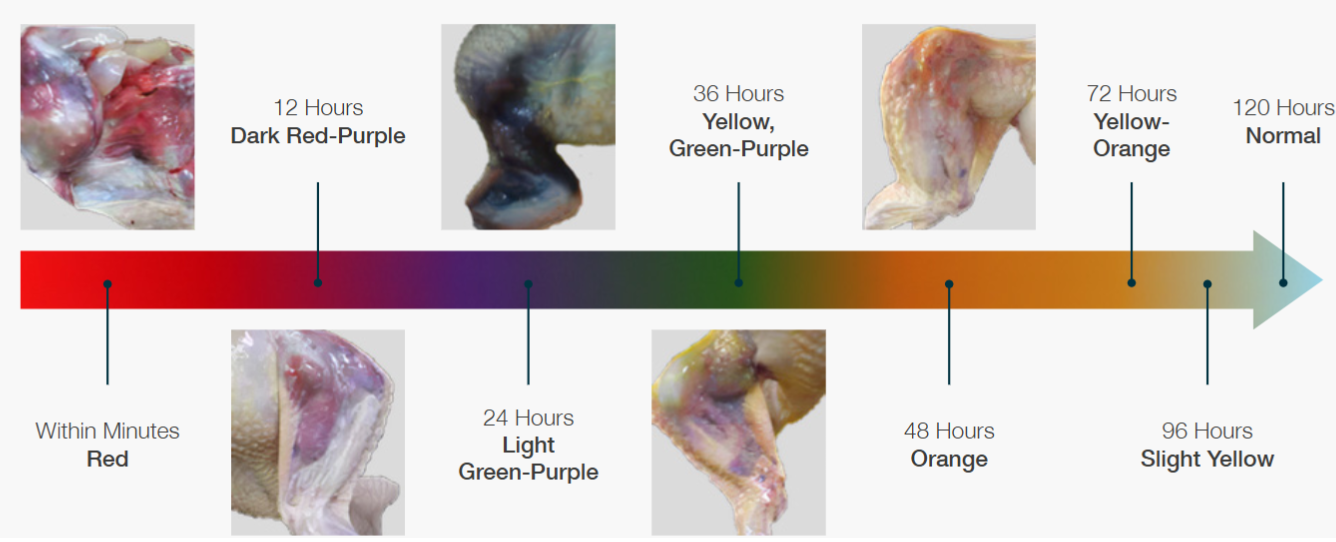
Broilers should be handled using two secure contact points (e.g., both shanks or wings held against the body) in compliance with legal standards. Carrying birds by the neck or wings is unacceptable. Regular review of catching protocols and proper training for catchers are critical. Bruising observed at the processing plant can help identify when and where injury occurred, guiding improvements.
Loading
Birds must be gently placed into transport modules or crates, loading from top to bottom. Modules are preferable due to lower injury risk. Crates must be checked to ensure birds are upright. Proper stocking density is essential; overfilling causes overheating and mortality, while underfilling increases chilling and instability. Adjust stocking based on temperature, crate size, and bird weight, in line with regulations.
Mechanical Catching
Mechanical harvesting must be carried out at moderate speeds by trained personnel, following manufacturer guidelines. Equipment should be aligned carefully with crates to prevent injury, and birds must not be crowded or forced.
Ventilation
House doors should remain closed during catching to maintain ventilation and temperature control, depending on the catching method used.
Thorough planning, correct technique, and strict adherence to welfare standards are key to reducing damage and ensuring bird well-being during catch.
Key points:
- Plan carefully and supervise catching closely.
- Catching should be carried out by competent and trained personnel only.
- Reduce light intensity prior to catching.
- Remove or raise obstructions such as feeders or drinkers before beginning the catching operation.
- Minimize bird activity during catching to avoid injuries and optimize product quality.
- Use partitions in large houses to avoid crowding.
- Maintain adequate ventilation during catching and monitor birds closely for signs of overheating.
- During thinning, the environment for any birds remaining in the house must be maintained as much as possible, and access to feed and water must be given immediately after catching is complete.
- Within local laws and regulations, adjust bird numbers in crates/modules to allow for bird weight and ambient temperature
Broiler transport and delivery
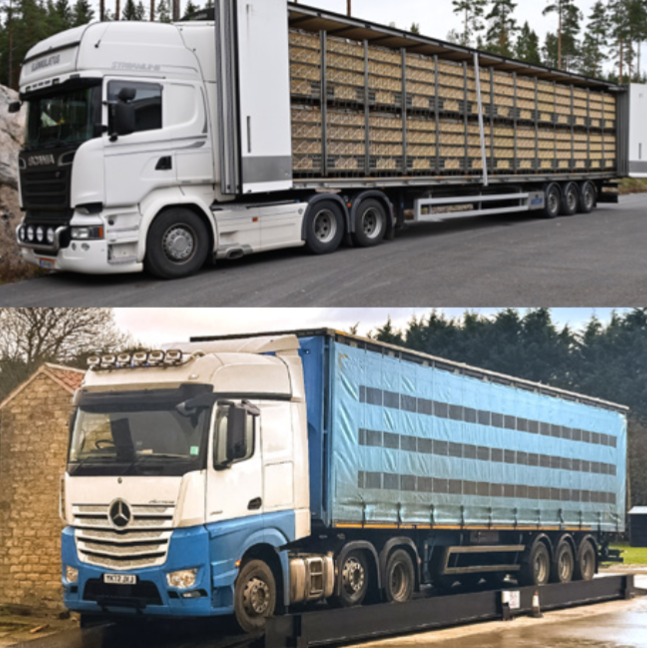
Proper transport of broilers is crucial for maintaining welfare and minimizing stress-related losses. Transport vehicles must protect birds from weather extremes, ensure adequate ventilation, and comply with legal standards. The internal microclimate often differs from external conditions, necessitating the use of heating, cooling, or fans as needed.
In hot weather
Use fans during loading and allow spacing between crate tiers or include empty crates to improve airflow. Birds are especially vulnerable to overheating when stationary, so transport should commence immediately after loading. Driver breaks must be brief and legally compliant. Any delays in unloading at the processing plant require supplemental ventilation.
In cold weather
Cover loads with curtains to reduce wind chill and monitor bird comfort regularly.
Delivery considerations
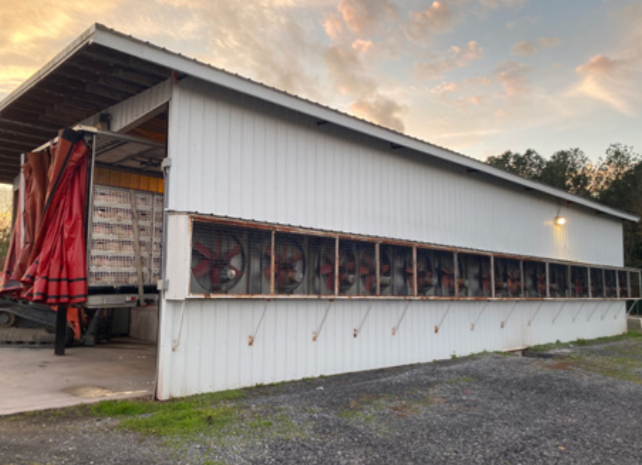
Routes should be smooth to prevent bird injury. At the processing plant, trucks should park in covered areas and ensure ventilation is not obstructed. Holding facilities must maintain appropriate lighting, ventilation, and temperature control. Blue light helps calm birds, and foggers or water-sprayed fans can assist with evaporative cooling in high heat and low humidity conditions.
Overall, meticulous transport and delivery management protect bird welfare and ensure processing quality.
Key Points:
- Local transportation laws and regulations must be followed.
- Vehicles must provide:
- Adequate protection from the environment.
- Suitable ventilation during transportation.
- When necessary, additional ventilation and heating should be used:
- During loading.
- When the vehicle is stationary.
- In the holding area at the processing plant.
- Birds should not remain on the vehicle for any longer than necessary
Download the 2025 Broiler Management Handbooks here


 3 July 2026
 3
minute read
3
minute read