





Ukraine poultry output seen rising despite war pressures
Power outages, labour shortages continue to strain sector
 12 March 2026
 2 minute read
 By:
By: The US Department of Agricultural Service Foreign Agricultural Service (USDA FAS) post in Ukraine estimates 2026 poultry production above 2025 levels, reflecting ongoing industry adjustment to the new
operational environment.
War-related risks include production process stalls associated with prolonged power outages, increased production costs due to the intensive use of alternative electricity sources, stagnant demand due to continuing population outflows, workforce shortages and increased staff turnover due to conscription, logistical and cold storage problems, severe 2025/2026 winter weather conditions that required additional heating, and work process interruptions due to increased air alerts.
Many producers had to slow down production in the second half of 2025 and invest in new energy-
generating equipment. All these factors negatively affected Ukrainian chicken meat production in 2025.
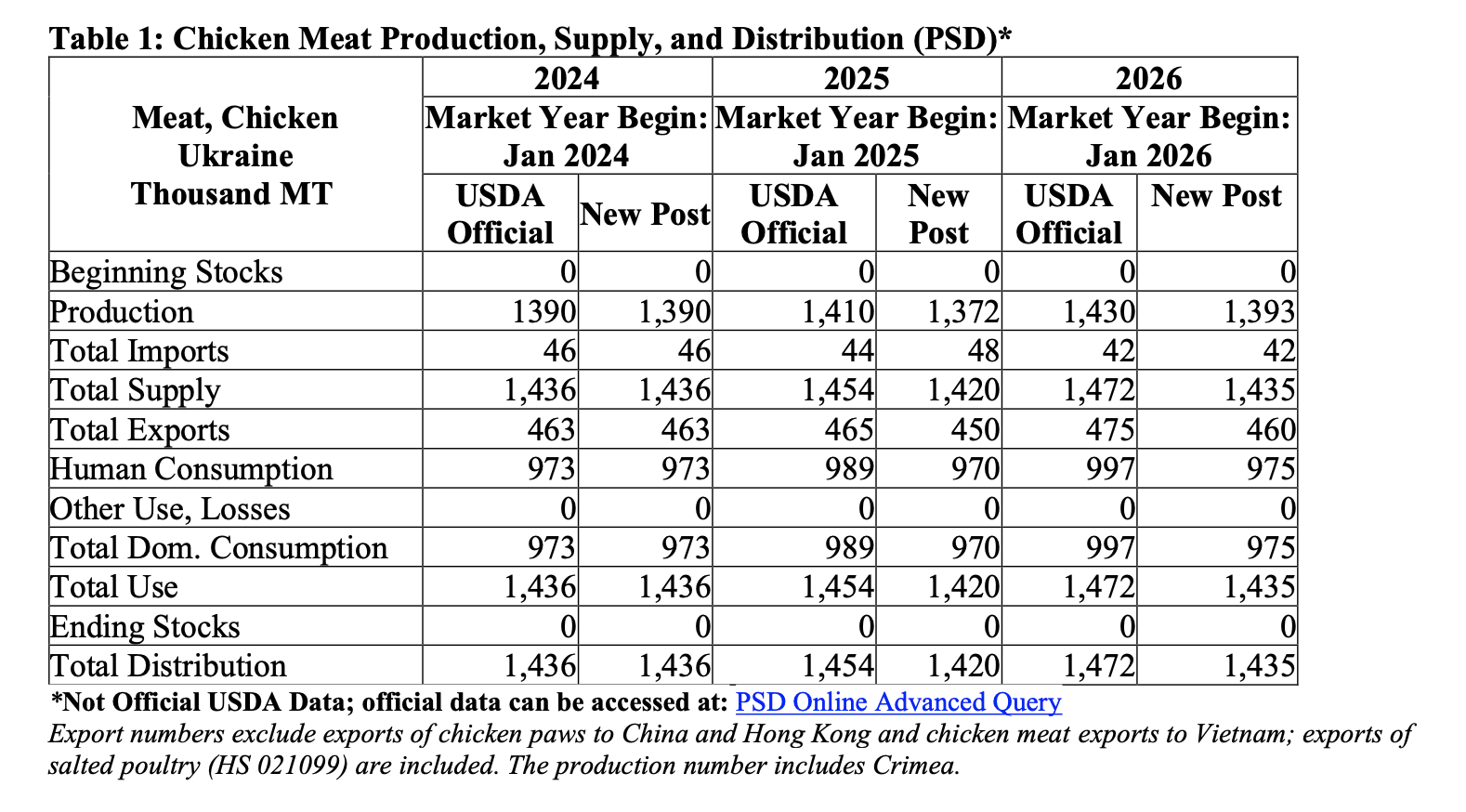
The industry’s vertical integration provides additional resilience by enabling cross-subsidization of poultry production from crop production, trading, oilseed crushing, and commodity exports. However, many producers had to cut production in 2025 and seek additional financial support domestically and internationally. The two largest poultry producers, MHP SE and Dniprovsky, restructured their debt to gain additional operational flexibility in 2026. Through significant effort to adjust, industry is likely to return to production levels similar to 2024, but further growth is unlikely.
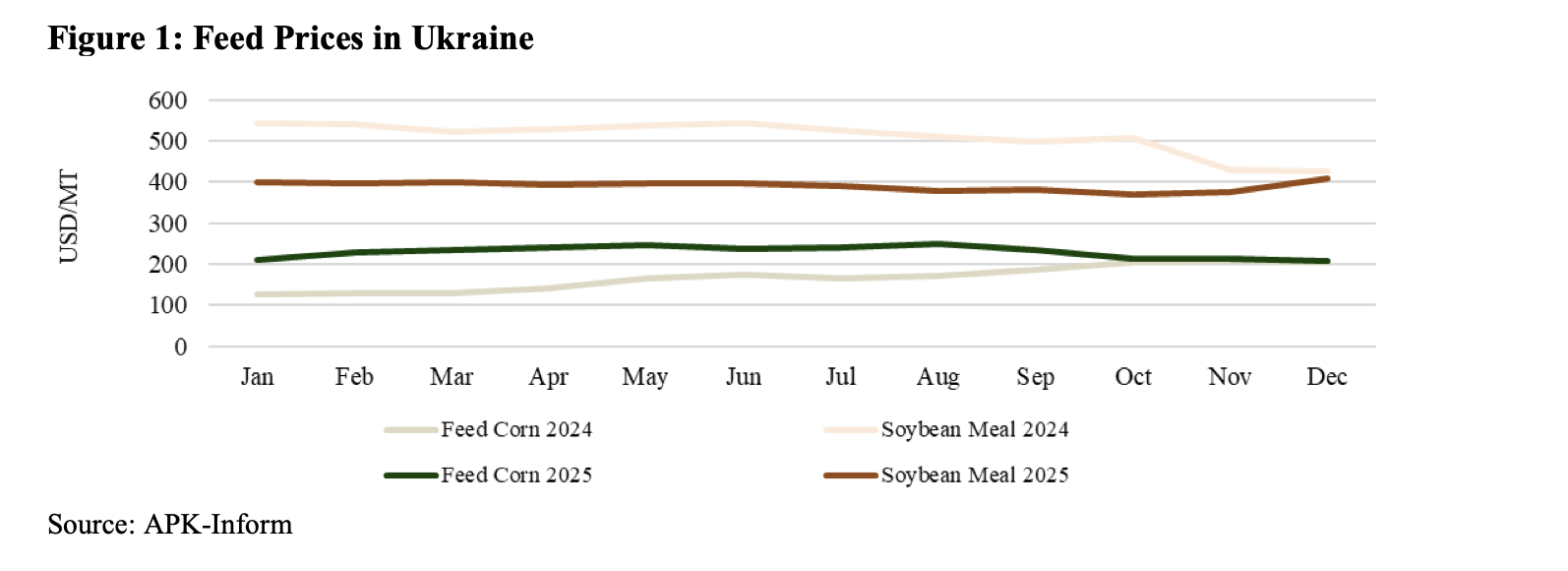
All chicken meat producers faced growing production costs in 2025 and early 2026. Although increased soybean production and a subsequent crash led to a drop in feed costs in 2025, the cost of other production inputs continued to climb (Figure 1).
In regard to the changing labor market, meat processors reported a shortage of qualified staff and increased need to retrain newly acquired staff. They also reported growing share of women and older employees, who are less likely to be drafted, and a significant salary increase for the remaining employees. The Ukrainian government allows for temporary conscription waivers for critically important workers, but ongoing staff turnover created issues.
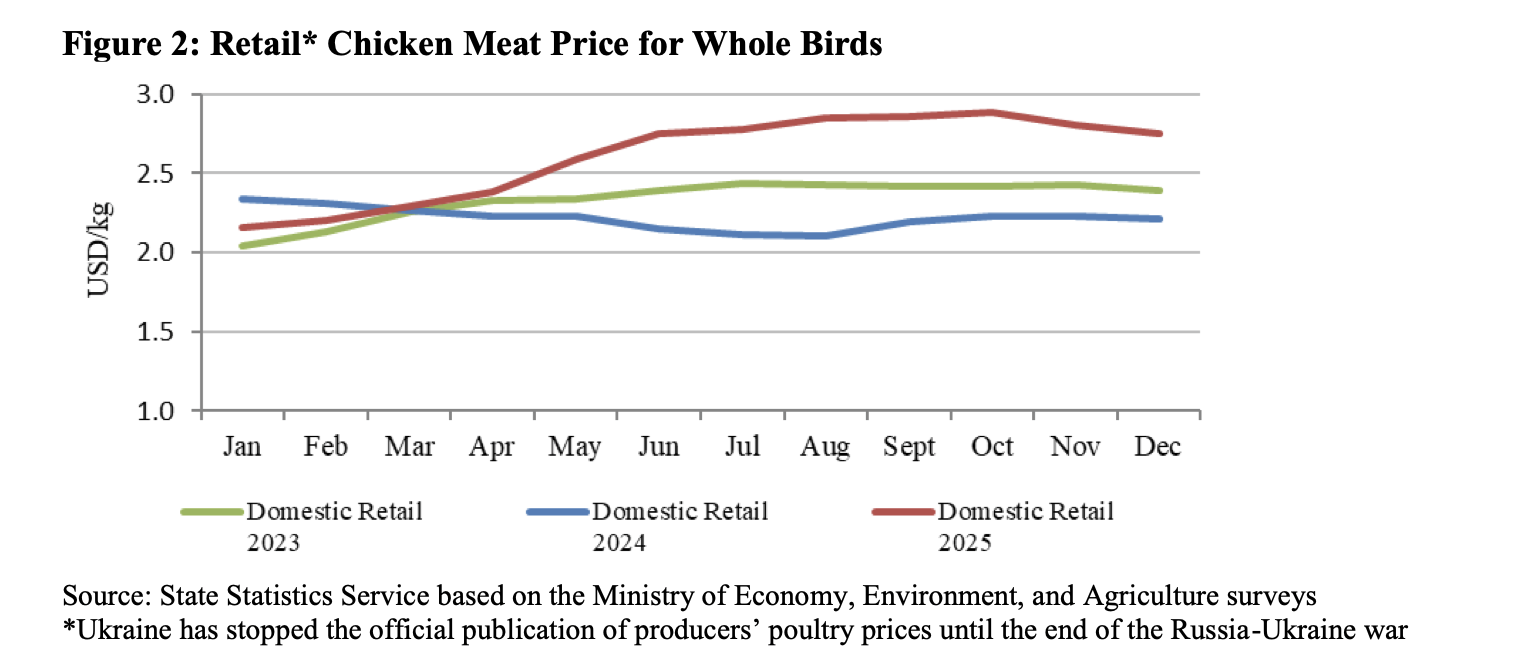
The share of energy costs in total production grew significantly, as producers relied on backup generators during longer blackouts, paying for diesel fuel and maintenance. Chicken meat producers had to pass additional costs onto buyers; therefore, growing production costs led to higher chicken meat prices (Figure 2). Nevertheless, chicken remains the cheapest animal protein and constitutes approximately half of all animal protein consumption in the Ukrainian diet.
Disease outbreaks remain a production and export risk factor. No highly pathogenic avian influenza (HPAI) outbreaks in commercial poultry flocks were registered in Ukraine in 2025. However, Ukraine reported one non-poultry HPAI case in northern Ukraine.