







Research reveals causes of culling and mortality in Norwegian laying hens
Páll Gretarsson's doctoral work reveals important health problems in Norwegian laying hens and provides new insight into the causes of keel fractures By:
By: The main objective of Páll Gretarsson's doctoral thesis was to gain new knowledge about the most important health problems in commercial laying hens in Norway.
To identify the most important health problems and uncover causes of mortality, he has described findings at the time of slaughter in slaughtered chickens and performed autopsies of chickens that died on farms.
“We found that the most common reasons for laying hens being discarded at slaughter are skin inflammation, peritonitis and death during transport,” says Gretarsson.
The researchers also found significant variation between different slaughter batches, both in terms of the number of discards and mortality during transport.
"When we examined dead hens at the end of the production period, we found that the most common problems were fatty liver, emaciation and inflammation of the fallopian tubes," he described.
Non-traumatic keel fractures
In addition, a significant proportion of the hens had keel fractures.
Pelvic fractures are a common problem in commercial laying hens worldwide. The cause of these fractures remains unknown, despite much research over the past 30 years.
“I have been particularly interested in understanding why keel fractures occur,” says Gretarsson.
He studied both visible and microscopic characteristics of the fractures as well as the formation and development of bone tissue in the keel.
"Interestingly, X-ray and tissue studies showed signs that many of these fractures are not due to trauma, as many have previously believed, but that they may have other causes. To know for sure what these causes may be, we need to do more research on individual hens and individual fractures, instead of entire flocks as research has been dominated by to date," he explained.
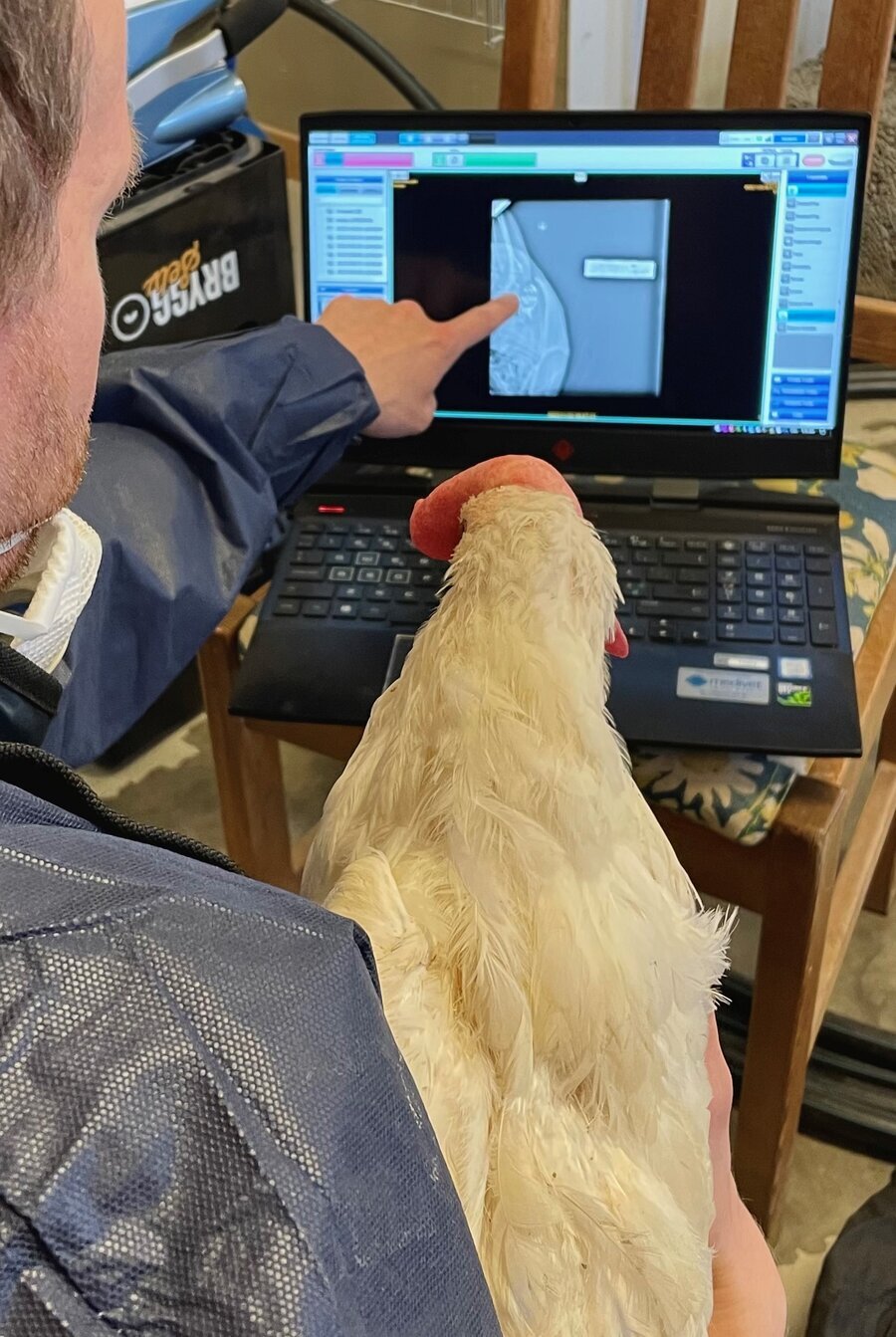
Cartilage canals found in the keel bone
The researchers also found cartilage canals in the cartilage of the keel, which has not been described before in the keel. Cartilage canals are found in growth cartilage, and contain blood vessels, among other things. It is now known that the failure of the blood supply in these cartilage canals is an important cause of osteochondrosis dissecans (OCD) in pigs and foals.
One can speculate whether these channels in the keel may play a role in the formation of keel fractures, which opens up several exciting research questions, says Gretarsson.
Can contribute to better guidelines and prevention
Gretarsson says research into health challenges in laying hens is important because it can contribute to better health and welfare in the poultry industry. His research results can lay the foundation for future research investigating these challenges.
“By understanding the underlying causes of common health problems, we can develop better guidelines and preventive measures. This is not only important for the animals, but also for consumers and farmers, who depend on a healthy and productive poultry population,” he said.
He hopes that his research on keel fractures in particular can be significant in that it opens up new research questions that explore non-traumatic causes of keel fractures.
"This can lead us closer to understanding the causes so that we can develop solutions to this common problem," he said.


 1 July 2026
 2
minute read
2
minute read