





The genetics behind Hy-Line International’s hens
A global look at how Hy-Line’s genetic selection improves egg production, efficiency and sustainability By:
By: Part of Series:
In a world where nearly 800 million people go hungry every day, feeding the planet efficiently has never been more urgent—or more complex. At the forefront of this challenge is Hy-Line International, a global leader in the genetic development of egg-laying hens. Tom Dixon, Global Marketing Manager at Hy-Line International, recently shed light on how the company is using cutting-edge science and a long-term vision to shape the future of egg production.
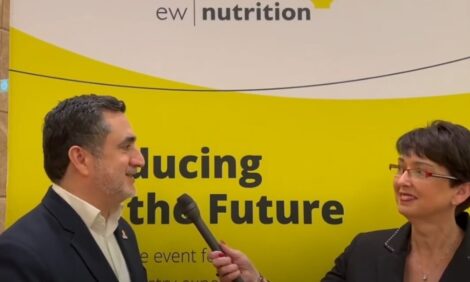
“We are committed to investing in genetic research using the latest technology to develop and deliver efficient, productive, egg-laying genetics,” Dixon said during a presentation at an EW Nutrition sponsored event in Berlin, Germany for poultry industry experts titled Producing for the Future.
Hy-Line focuses exclusively on developing the genetic foundation of the world’s egg-laying hens. That singular focus, Dixon says, has helped it remain at the forefront of an increasingly data-driven and sustainability-conscious industry.
“We’re really working to feed the world, and it’s a great industry to be in,” said Dixon.
Starting at the genetic source
The journey of a Hy-Line hen begins with four distinct pedigree lines - A, B, C and D. Each line is developed over years of genetic tracking and selection. Dixon compares the geneticist’s work to that of a master chef selecting ingredients.
“The geneticists look at it almost like a cook, taking their ingredients and putting it together to make the end product,” he said.
Each pedigree line is evaluated for dozens of traits, including egg number, egg weight, shell strength, feed conversion, nesting behavior and robustness. These traits aren’t isolated in the lab – they’re tested in diverse environments worldwide to reflect the real-world challenges birds face.
The process begins with intensive pure line evaluation. Birds from each line are monitored from hatch to end-of-lay – often beyond 100 weeks of age – for hundreds of variables. Traits such as shell color, uniformity, internal egg quality (e.g., Haugh units, albumen height), feed conversion and livability are all meticulously measured.
To ensure accuracy and progress, Hy-Line breeds its own pure lines at not only the company’s USA Pedigree Farms, but also increasingly at international sites like Brazil, India and Mexico. This international presence allows the company to test and select birds under different environmental pressures, ensuring that selected lines are globally resilient.
The four-way cross: Creating commercial layers
Once the strongest birds in the pedigree pool are identified, Hy-Line enters its next phase: creating a four-way genetic cross. In this process, an A-line male is crossed with a B-line female to create the paternal grandparent line. A C-line male and D-line female form the maternal grandparent line. The resulting offspring become the parent stock, which is then distributed globally.
“That’s multiplied out into hundreds of thousands of grandparents and millions of parent stock to make hundreds of millions – even a billion plus – of commercial layers,” Dixon explained.
These final commercial birds contain the best genetic combinations from all four lines. Each trait, from laying persistence to behavior, must perform harmoniously to deliver value at scale. This four-way hybrid structure ensures hybrid vigor, maximizing desirable characteristics in the commercial layer.
Big data and genomic selection
Hy-Line's geneticists aren’t just relying on visible traits. They use an in-house molecular genetics lab to analyze blood samples taken from birds at hatch. These samples help identify genetic markers associated with desirable traits.
"We continue with 29 years of our own in-house molecular genetics lab data, which is unique in the industry," Dixon emphasized.
The data collected includes:
- Egg production numbers
- Egg weights
- Shell and internal egg quality
- Feed intake and conversion rates
- Behavior metrics like nesting and social interaction
- Robustness to diseases such as avian influenza, Newcastle disease and bronchitis
The nesting traits are assessed through both direct observation and automated data collection. In existing facilities via trap-nest aviary system but newer research facilities utilize RFID chips, allowing researchers to automatically record egg-laying times and locations, which is particularly useful in cage-free environments.
This data is processed through a sophisticated algorithm that ranks birds based on breeder value. Typically, fewer than 10% of the highest performing birds are selected to produce the next generation of improved genetics from Hy-Line’s vast pedigree population.
“The art of the geneticist is figuring out how to find the best birds to pass on the right traits that improve the commercial layer,” said Dixon.
Long-term productivity wins
For producers, the ultimate metric is productivity—specifically, the number of eggs laid over a hen’s lifetime. But unlike in the past, today’s focus is not just on peak production but on how long birds can maintain it.
“Now we’re talking about 100 weeks, 110 weeks, 120 weeks – single cycle without molt,” said Dixon. “So long-term production is what’s now the goal of the genetics company.”
This is a major shift from decades past, where hens were pushed to peak early, then molted and restarted. The modern layer is now considered a marathon runner, not a sprinter.
With every new generation, Hy-Line aims to add four more eggs per hen housed. That might sound modest, but across billions of hens, it translates to tens of billions of additional eggs—enough to feed tens of millions more people.
Efficiency is king
Egg production isn’t just about numbers—it’s also about doing more with less. Feed represents around 75% of the cost and environmental footprint of producing an egg. That’s why improving feed conversion ratio (FCR) is central to Hy-Line’s breeding program.
Dixon said that with each generation, hens now require about five grams less feed per dozen eggs.
Over the last three decades, Hy-Line has transformed what a laying hen can do. By comparing 1995 performance metrics with 2023 data, the improvements are striking:
- +80 eggs to 80 weeks
- +4 kg egg mass per hen
- −19 grams of feed per egg
- +30% shell strength
- +60% hen lifespan
“In 1995, it took 132 grams of feed to make a white egg. Today, we’re talking maybe 113 grams or so,” Dixon said.
That difference, when applied to 5 billion hens globally, equals 800 billion grams of feed saved each year. In environmental terms, this translates to a reduction of 11,000 hectares of cropland and 30,000 tons of CO2.
“By improving the feed conversion, it’s equivalent to taking thousands of cars off the road,” said Dixon.
Expanding the global genetic footprint
Hy-Line's genetic improvements aren't developed solely in controlled, ideal conditions. The company has built a strategic network of research farms around the world to collect and compare data across environmental variables.
- India: Hy-Line developed the W-88 specifically for India’s climate, feed, and husbandry methods. It’s a localized solution built from global genetic insights.
- Brazil: Home to the Brazil Pedigree Farm, which supports research in a tropical climate with different disease pressures.
- Mexico: Focused on cage-free environments, where birds are tracked in individual trap nests to evaluate welfare-related behavior.
“In India, we tried for years to put a USA-developed bird in Indian conditions, and it really would struggle,” said Dixon. “So Hy-Line established an Indian program to make a bird that’s a W-80 India which is suited to their environmental conditions.”
Beyond research farms, Hy-Line conducts extensive field trials with hundreds of thousands of birds under commercial farming conditions. These trials are essential for testing livability, disease resistance and heat tolerance—traits often masked in lab environments.
This real-world feedback loop allows Hy-Line geneticists to learn from different regions of the world and adjust their selections based on real-world findings.
A Hy-Line hen for every market
Hy-Line doesn’t believe in a one-size-fits-all solution. Different regions demand different egg sizes, colors, and production methods. In Saudi Arabia and Colombia, large eggs are preferred. In India, smaller eggs are the norm, and Spain prefers extra-large eggs. Hy-Line develops their hen genetics accordingly.
Shell color preferences also vary—darker brown eggs are often seen as more "natural" and appealing in many countries.
“We’ve got to have the ability to make the bird that fits that market,” said Dixon. “So we study egg traits in all our pure line birds.”
That extends to the growing market for tinted eggs, which make up nearly 20% of global egg production, especially in Asian countries like China and Japan. Hy-Line’s “tint” varieties are hybrids of white and brown genetics.
The global shift toward cage-free production has introduced new challenges and opportunities for genetic selection. Birds must not only find and use nest boxes but must also interact peacefully with flock mates.
“It’s a fine balancing act of activity to find the nest, but not so active that it causes welfare issues,” Dixon said.
Years ago, Hy-Line began incorporating welfare-based characteristics, like calm temperament and nesting behavior, into their breeding programs. Research farms in Mexico now test purebred birds under cage-free conditions, using methods like trap-nest housing to monitor individual performance.
The long game: Continuous genetic improvement
Hy-Line's entire genetic strategy is aligned with their sustainability goals. Better genetics mean fewer birds can produce more eggs with fewer resources. That’s a direct contribution to environmental and economic sustainability.
By improving feed efficiency and egg output, Hy-Line’s hens now enable producers to feed more people more affordably, while also reducing their environmental footprint.
Hy-Line evaluates sustainability across three pillars: planet (environment), people (nutrition), and profits (economic viability). Each new bird generation supports all three:
- Planet: Reduced land and feed usage
- People: 30 million more people fed annually
- Profit: €800 million (US$907 million) added to the egg economy each year
“That’s improved economics. And for the consumer, it’s allowed consumers to have a very affordable source of protein,” Dixon said.
As food insecurity persists worldwide, Dixon sees eggs playing a growing role in public health.
Eggs are not only affordable but also efficient. Compared to beef, pork, or even dairy, they offer the highest protein output per unit of feed.
“Eggs really are a superfood,” said Dixon. “More and more health studies find new benefits of the egg for human nutrition.”
Given that 3 billion people cannot currently afford a healthy diet, eggs provide a scalable and economical solution. With improved genetics lowering production costs, even consumers in low-income regions can gain access to this highly nutritious food.

Sarah Mikesell
Sarah Mikesell grew up on a five-generation family farming operation in Ohio, USA, where her family still farms. She feels extraordinarily lucky to get to do what she loves - write about livestock and crop agriculture. You can find her on LinkedIn.

More in this series: Producing for the Future
September - June 2025
 16 September 2025
 2
minute read
2
minute read