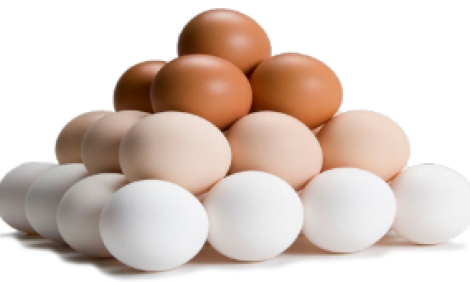



The Modern Layer: Inside Lohmann Breeder’s genetic, management and welfare strategy
Lohmann’s technical expert urges producers to reimagine rearing
 By:
By: Part of Series:
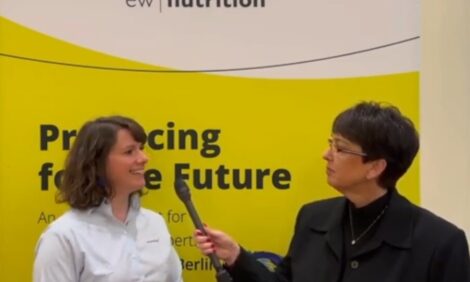
When it comes to feeding a growing global population, few proteins rival the egg in affordability, sustainability and accessibility. But achieving consistent, high-performance egg production in today’s complex agricultural environments requires more than good intentions—it demands science, strategy and precision. That’s the message from Farhad Mozafar, Technical Marketing Manager at Lohmann Breeders, who recently offered an in-depth look at how his company is shaping the future of layer operations worldwide during a presentation at an EW Nutrition sponsored event in Berlin, Germany for poultry industry experts titled Producing for the Future.
Mozafar spoke about genetics and what Lohmann Breeders is doing, and he made an appeal to the industry. That appeal centered on a single but often overlooked truth: the foundation for high egg production isn’t built during lay – it’s built during rearing.
Rearing: The industry’s blind spot
While most attention in commercial egg production focuses on the laying period, Mozafar argues that this is too late.
“We focus a lot on the production period in table egg production, and rearing is kind of neglected or underestimated,” he said. “I want the industry to focus on the egg from start to finish.”
The early weeks of a pullet’s life are when the majority of its structural development takes place – including skeletal growth, organ development and immune system function. Mozafar stressed that any failure in this stage has lifelong consequences.
“If we miss this development, in this stage of age, it's not reversible,” he warned. “We cannot correct it.”
Citing research and experience from Lohmann’s global customer base, he demonstrated how body weight at five weeks of age correlates strongly with later production outcomes, including egg numbers, shell quality and even mortality.
“There is no doubt about that, proper housing, rearing and achieving top pullet quality is our foundation for our layer, and especially for extended laying,” he said.
Modern genetics, modern needs
Over the last decade, Lohmann has significantly advanced the genetic performance of its layer lines. Mozafar highlighted how the company’s breeding program now targets not only egg number and egg mass, but persistency, shell strength and feed conversion—all across various types of production systems.
“This is the modern layer,” Mozafar said. “But one of the requirements for this layer is where we can get that. So what do we need? First of all, we need excellent genetics.”
He emphasized that while genetics play a foundational role, the environment and management must support it.
“We cannot feed them, we cannot manage them, we cannot treat them like we did even 10 years ago,” he said. “Things have changed. They are more productive, and their life cycle is much longer than before, so we want them to also have good mobility through the whole life length.”
Diversity in product, precision in delivery
Lohmann Breeders is headquartered in Germany with additional genetic lines developed in Spain, Scotland, and Canada. It distributes parent stock to more than 100 countries. Their birds are laying table eggs in over 120 countries amid a wide variety of housing systems and climates.
Their global reach demands a high degree of flexibility. Mozafar showcased Lohmann’s extensive product portfolio, which includes a range of White, Brown and Tinted varieties adapted for cage, cage-free and free-range systems.
“For example, when we talk about LSL varieties, we have more than five different varieties,” he noted. “From LSL Ultra Light to LSL Extra—and this is all about the egg size.”
For example, the LSL-Lite EU has been specifically developed to meet the market requirements in Germany and the Netherlands, delivering exceptional performance and results.
These genetic variations allow distributors and producers to match birds to local market preferences, such as shell color and egg weight.
Data-driven breeding and selection
Mozafar detailed how Lohmann’s selection process incorporates data from a wide variety of sources, including field trials, genomic selection and cross-line testing. By collecting performance data in both controlled and commercial environments, the company can ensure its breeding decisions reflect real-world conditions.
“We use genomic selection,” he explained, “which means we get the information, the blood test from the day-old chickens—around 50,000 SNPs (single nucleotide polymorphisms). This information is reliable, much faster, and helps provide faster genetic progress at the end.”
One of the breakthroughs, Mozafar said, has been shortening the generation interval, allowing the company to respond more quickly to market demands.
“We need time to act in time,” he said. “So we need enough information from the market – so about four years in advance – to be prepared for the right layer.”
The art of brooding
Mozafar placed special emphasis on brooding which is the period immediately after hatch when chicks are at their most vulnerable.
“They are tough creatures, but we shouldn't forget – they are babies and should be handled with care,” he said.
Temperature, humidity, light and early access to feed and water are critical. He pointed to studies showing that chicks with early access to nutrients developed longer intestinal villi, the structures essential for nutrient absorption.
“All the maternal antibodies are placed with the yolk,” he said. “So, if the yolk is not absorbed in time, the chick is not going to have a strong immune system for later life.”
He also recommended body temperature monitoring as an essential tool for assessing chick welfare, particularly in the first 4-5 days after hatching, when chicks are not able to regulate their own body temperature. He also advocated for body temperature monitoring as a simple but essential tool in evaluating chick welfare.
“We just need a very simple baby thermometer that we can buy at any pharmacy worldwide,” he said. “The temperature should be around 40–41°C.”
Feed strategy should focus on timing and economics
One of the recurring themes in Mozafar’s presentation was the importance of aligning feed with developmental milestones, this is why Lohmann recommends diets tailored to specific needs at each life stage.
“For example, if I couldn't reach the right target body weight at week 3 with the starter feed, which has the highest energy level and amino acid levels, how can I reach it with grower? Never, ever.”
He addressed the pushback some producers give due to the higher cost of starter diets.
“Some people argue with the financial part because we know that the starter is the most expensive feed,” he acknowledged. “But if you calculate, it is nothing. They don’t eat very much at that time. If you have to catch up later, they eat much more and it’s going to cost much more. And then the chick is producing body fat, not skeleton, muscles and organs.”
Better outcomes start in the hatchery
Mozafar cited field data from 600,000 Lohmann birds showing a strong correlation between early body weight and performance metrics like total egg number and mortality.
“All the birds that have reached the average or a little bit over average standard body weight at 6 weeks of age—they have the highest number of eggs at 100 weeks of age,” he said. “And the lowest mortality is also for the birds that have exactly the average body weight or over average.”
Mozafar’s message was clear: flock success begins in the hatchery, is solidified during brooding and rearing, and is executed in production.
“If we don’t do it from the first moment up to the end, then we are lost,” he warned. “There is no miracle later.”
A call to the industry
In closing, Mozafar issued a challenge—not just to producers, but to the industry at large. He called for better weighing technology that respects animal welfare, improved data collection tools and a cultural shift toward valuing early-life management.
“This is also a request, a plea to everyone,” he said. “Why don’t we have easy modern methods of weighing laying hens in different housing systems? Because we know how difficult it is to catch the birds and do it correctly with current methods. So this is so important—that this request is coming from the table egg producers, from breeding companies, from everywhere.”
Ultimately, his presentation was both a technical roadmap and an industry call to action.
“You don’t get high performance by chance,” he said. “You get it by design.”

Sarah Mikesell
Sarah Mikesell grew up on a five-generation family farming operation in Ohio, USA, where her family still farms. She feels extraordinarily lucky to get to do what she loves - write about livestock and crop agriculture. You can find her on LinkedIn.
 6 July 2026
 1
minute read
1
minute read

More in this series: Producing for the Future
September - June 2025
 16 September 2025
2
minute read
16 September 2025
2
minute read