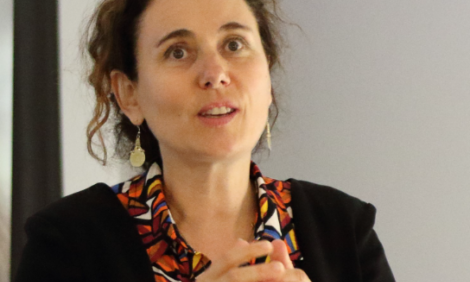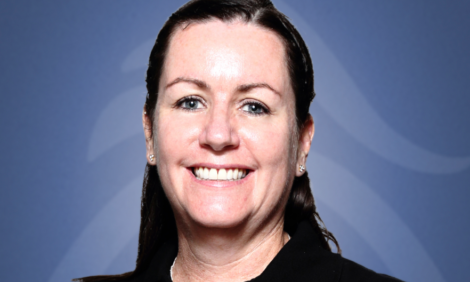






Women in Poultry: Dr. Amy Batal
Learn more about Dr. Amy Batal Consultant Nutritionist
 By:
By: Part of Series:
I graduated from California Polytechnic State University, San Luis Obispo, and continued my education at Iowa State University, where I earned my master’s degree in Animal Nutrition, specializing in poultry. I later completed my Ph.D. in Animal Nutrition with a focus on poultry nutrition at the University of Illinois.
My career began in academia as a professor of poultry nutrition at the University of Georgia, where I was honored to achieve tenure. From there, I transitioned into industry, helping launch and build the U.S. nutrition division at Huvepharma, an experience that allowed me to bridge scientific research with commercial application. I later joined Sanderson Farms, where I served as Director of Nutrition for one of the largest poultry companies in the United States, gaining invaluable experience in large-scale integrated production.
Today, as a consultant, I work alongside nutritionists, veterinarians, and industry leaders to help guide decisions that improve bird health, production efficiency, and long-term sustainability. My focus is helping organizations translate emerging science into practical strategies that deliver measurable commercial impact. In addition to consulting, I work closely with the U.S. Soybean Export Council, contributing to technical bulletins and educational materials that communicate the value of U.S. soybean meal in commercial poultry systems. I also travel internationally to share applied, real-world examples that demonstrate how ingredient consistency and nutrient digestibility translate into measurable production results.
“The future of poultry will belong to those who can connect biology, data, and practical decision-making — and turn complexity into clarity.”
Describe a typical day in your current role
My role is highly strategic and collaborative. A typical day may include analyzing production data, evaluating nutrition or health strategies, discussing challenges with technical teams, drafting or reviewing technical communications, or helping organizations assess new technologies and ingredient solutions. At times, this includes developing science-based materials and collaborating with the U.S. Soybean Export Council to help highlight the performance and economic advantages of U.S. soybean meal, as well as participating in international discussions that demonstrate its value in commercial production systems.
What ties everything together is problem-solving — helping teams make confident decisions grounded in science while aligned with real-world production goals.
What’s unique about your role?
What makes my role unique is the perspective I’ve gained from working across multiple segments of the industry — academia, supplier innovation, integrated production, and now independent consulting.
I often serve as a bridge between research and application, translating scientific understanding into strategies that are practical, economically sound, and scalable. Whether supporting ingredient evaluation, contributing to technical outreach, or guiding formulation strategies, connecting viewpoints — from researchers to producers — is where I believe real progress happens.
What are the main challenges that you face in your role?
One of the biggest challenges is helping organizations make long-term decisions in an environment often driven by short-term pressures. Ingredient volatility, disease risk, economic shifts, and sustainability expectations require constant adaptation.
Another challenge is guiding change. Innovation is moving quickly, but adoption requires trust, data, and clear communication. Much of my work involves helping teams move from uncertainty to confidence.
What does the future of poultry health look like in terms of preventing and treating disease?
I believe the industry is moving toward a prevention-focused model built on resilience rather than reaction. Nutrition, gut health, and immune support will continue to become central pillars of disease management. Ingredient quality and consistency will also play an increasingly important role in supporting predictable health and performance outcomes.
We will increasingly rely on integrated data systems that allow earlier detection of challenges and more precise interventions. The future isn’t just about treating disease — it’s about designing systems that reduce risk before problems occur.
Are there individuals or organizations in poultry who you’ve found particularly inspirational?
Throughout my career, I’ve been inspired by leaders who challenge conventional thinking while staying grounded in sound science. Dr. Carl Parsons and Dr. David Baker, my major professors at the University of Illinois, along with Dr. Jerry Sell at Iowa State University, were foundational in launching my career. I deeply admire them for all they taught me — not only in technical rigor and scientific thinking, but in how to approach nutrition with discipline and integrity. I am also especially grateful to Dr. Nick Dale, my mentor at the University of Georgia, who served as a bridge between academia and industry and taught me how to evaluate research critically and translate it into practical, applicable solutions.
On the organizational side, my partnership with the U.S. Soybean Export Council has been invaluable. Working alongside their global team has expanded how I think about ingredient quality, supply chain transparency, and the real-world performance differences that origin and consistency can make in commercial flocks. Collaborating on technical bulletins, international presentations, and producer education has reinforced something I believe deeply: that sound science, clearly communicated, is the most powerful tool we have. USSEC’s commitment to connecting U.S. soy research with practical application around the world aligns closely with how I approach my own consulting work, and I’m proud to contribute to that mission.
Have you encountered any challenges as a woman in your field? If yes, how have you overcome them?
Like many women in technical fields, I began my career in environments where leadership and decision-making roles were predominantly male. Establishing credibility required preparation, persistence, and a strong commitment to technical excellence.
Over time, I learned that consistency and results build trust. By focusing on delivering value and maintaining a solutions-oriented mindset, I was able to earn respect and build strong professional partnerships. It’s rewarding to now see more women stepping confidently into leadership roles across the industry.
What outstanding challenge facing the poultry industry would you most like to solve?
Consistency remains one of the greatest opportunities for improvement — consistent ingredient quality, consistent bird response, and consistent production outcomes.
Reducing variability would significantly improve efficiency, sustainability, and economic performance across the entire production chain. Advancing how we measure, predict, and manage variation is an area where I believe the industry can make transformative progress.
My work with the U.S. Soybean Export Council has given me a firsthand window into how much ingredient origin matters. Traveling internationally and engaging with nutritionists and producers across multiple markets, I’ve seen how variability in soybean meal quality from different origins can translate directly into inconsistent bird performance, increased feed costs, and unpredictable health responses. U.S. soybean meal’s track record of consistency — in amino acid profile, trypsin inhibitor levels, and overall digestibility — is something I now reference regularly when working with clients on formulation strategy. That experience has made me a stronger advocate for ingredient transparency and supply chain traceability as tools for reducing the kind of variability that holds the industry back.
What’s the most exciting innovation that you see on the horizon for the poultry industry?
The integration of data analytics with nutrition and health management is one of the most exciting shifts happening today. We are moving toward a future where decisions are increasingly proactive and precision-based rather than reactive.
At the same time, innovations that improve nutrient utilization and support natural health mechanisms are redefining how we think about efficiency and sustainability.
What are you most excited about in the next 5–10 years regarding the poultry industry?
I’m excited about the growing alignment between scientific innovation and commercial application. The industry is becoming more data-driven, more collaborative, and more willing to rethink traditional approaches.
Over the next decade, I expect to see nutrition, health, and sustainability strategies fully integrated — creating smarter production systems that are resilient, efficient, and adaptable to future challenges.
What’s your next challenge?
My next challenge is continuing to help organizations navigate complexity while helping develop the next generation of technical leaders.
As the industry evolves, there is a growing need for professionals who can connect science, economics, and practical decision-making. Supporting that transition — while continuing to drive measurable outcomes — is where I see my greatest opportunity to contribute.
Professional bio:
Dr. Amy Batal is an internationally recognized poultry nutritionist and global technical authority with more than two decades of leadership experience spanning academia, integrated poultry production, animal health innovation, and strategic consulting. She has authored or co-authored more than 150 scientific publications and has delivered invited presentations across the globe, earning a reputation for combining scientific rigor with practical industry impact.
She earned her B.S. in Animal Science from California Polytechnic State University, San Luis Obispo, followed by a master’s degree in Poultry Nutrition from Iowa State University and a Ph.D. in Poultry Nutrition from the University of Illinois at Urbana-Champaign, where she trained under some of the most respected scientists in the field.
Dr. Batal began her career at the University of Georgia, where she served for over nine years as a faculty member in the Department of Poultry Science and achieved tenure. During her academic career, she led applied nutrition research programs, mentored graduate students, secured competitive funding, published extensively in peer-reviewed journals, and presented her research findings internationally.
Her transition into industry expanded her strategic leadership influence. As Director of Technical Services for Huvepharma USA, she built and led the company’s U.S. nutrition division, establishing its technical credibility and commercial foundation. She was later recruited to Sanderson Farms (now Wayne-Sanderson Farms), where she served for eight years as Director of Nutrition for one of the largest poultry integrators in the United States. In this executive role, she directed nutrition strategy across large-scale broiler and breeder operations, overseeing ingredient evaluation, formulation economics, product validation, and system-wide performance optimization within a fully integrated production model.
In 2022, Dr. Batal founded ABB Nutrition, LLC, where she advises poultry integrators, feed manufacturers, and ingredient suppliers domestically and internationally. She is widely sought after for her expertise in evaluating emerging feed ingredients and nutritional technologies, critically reviewing scientific literature, and assessing the biological and economic viability of new products entering the marketplace. Her work centers on reducing variability, improving nutrient utilization, strengthening production consistency, and translating complex scientific data into clear, actionable strategies that deliver measurable commercial outcomes.
An accomplished and engaging speaker, Dr. Batal is known for making complex nutritional science both relevant and compelling for diverse audiences. Whether addressing highly technical researchers, commercial nutrition teams, executive leadership, or producer groups, she has a distinctive ability to tailor her message — bridging detailed scientific insight with practical application in a way that resonates at every level.

Sarah Mikesell
Sarah Mikesell grew up on a five-generation family farming operation in Ohio, USA, where her family still farms. She feels extraordinarily lucky to get to do what she loves - write about livestock and crop agriculture. You can find her on LinkedIn.
 8 July 2026
 1
minute read
1
minute read