





Balancing priorities: Aviagen CEO Jan Henriksen on sustainability, animal welfare and food security
Henriksen outlines how governments and the poultry industry must balance sustainability goals, animal welfare and protein security in a rapidly changing world
 By:
By: The sustainability of the poultry sector is no longer defined by a single metric. Carbon footprint and emissions reporting remain important, but the conversation has expanded. Today, governments, retailers and consumers are weighing animal welfare, food security and social responsibility alongside environmental performance – and often asking which priority should come first.
From his global vantage point, Jan Henriksen, CEO of Aviagen, sees these pressures converging into what he describes as a triangle that the poultry industry must learn to manage.
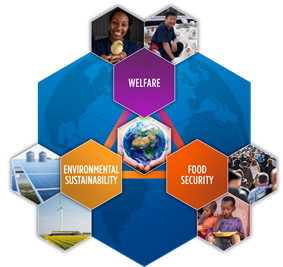
“I speak to customers all over the world, and I also speak to governments. About 10 years ago, everything was about environmental sustainability, then in some parts of the world, we started talking more about animal welfare,” Henriksen said. “Now, with deglobalization, we are seeing food security as our third point.”
He noted that governments are considering what is most important right now for their country – environmental sustainability, food security or animal welfare? For Henriksen, the answer is not choosing one over another but recognizing how closely they are connected.
Moving from carbon metrics to a broader mandate
Henriksen has spent decades in the poultry business and says the framing of the sustainability conversation has shifted dramatically in the past 10 years.
What began as a focus on CO₂, transport and environmental efficiency has evolved into a much broader societal discussion. In Europe and other regions, animal welfare has moved to the forefront, with debates about stocking density, housing systems and bird management. At the same time, geopolitical shifts and supply chain disruptions have elevated food security as a national priority.
COVID-19, trade tensions and avian influenza outbreaks have reminded governments how fragile supply chains can be. Empty shelves in developed economies altered the political calculus almost overnight.
“For me, it’s very interesting to see how governments change the focus from the environment and welfare discussions to suddenly shifting to making sure there is adequate food production in their own country,” he said. “Then, the next step they consider is self-sufficiency – how do we make sure we have genetics in our own country.”
Henriksen describes this shift not as a rejection of environmental or welfare goals, but as a rebalancing. Countries are now asking how to secure domestic protein production while still meeting long-term sustainability expectations.
All three points are connected
Despite the apparent tension between the three priorities, Henriksen believes they are fundamentally aligned.
For him, sustainability is not only about emissions reductions or logistics efficiency. It includes how birds are managed, how mortality is reduced, and how welfare improvements translate into stronger biological performance.
“We actually think that everything goes hand in hand,” he said. “Welfare is part of social sustainability because good welfare is good business. If the birds are not stressed, mortality is low, etc. – that’s good business for everyone.”
In practical terms, lower mortality, stronger robustness, and improved health directly enhance feed efficiency and reduce resource use per kilogram of meat. Welfare and efficiency are not opposing forces; they are interdependent outcomes of good management and sound genetics, according to Henriksen.
Food security, meanwhile, reinforces the case for poultry as a protein source. Compared to other livestock sectors, poultry production requires relatively modest capital investment and delivers rapid turnover, making it an accessible protein solution in both developed and emerging markets.
From Henriksen’s perspective, the industry already possesses the tools needed to balance the triangle, but the emphasis varies by country.
“Where are you in this scale? It’s country or at least region-specific, and it’s evolving based on many factors,” he explained.
Aligning ambition with production reality
As Henriksen travels globally, he hears a consistent theme from customers: aligning sustainability expectations with the daily realities of production is not simple.
Disease pressure, labor constraints, and geopolitical uncertainty weigh heavily on producers. Highly pathogenic avian influenza (HPAI) has reshaped trade flows and forced border closures. Labor shortages complicate hatchery, farm, and processing operations. Tariffs and trade disputes add another layer of unpredictability.
Henriksen outlines what he sees as the three strategic challenges facing the sector.
“First is finding long-term labor solutions for our farms, hatcheries and processing plants. This will continue to be an issue going forward. Second is the disease pressure in the world and how to manage that. And the third issue is the geopolitical trade issues we are experiencing,” he said.
Against that backdrop, sustainability cannot be an abstract reporting exercise. It must be embedded in operational resilience. Biosecurity sits at the center of that resilience. Henriksen stresses that preventing disease is both a welfare imperative and a sustainability strategy.
“One of the most important things is to keep diseases out of your flock,” he noted. “Coming back to welfare, it's all connected. Strong biosecurity is connected to low disease levels; it's sustainable and it's good for bird health, which is good for business.”
When it comes to HPAI, Henriksen doesn’t believe that a vaccine is the right path forward and says it’s more important for the industry to focus its efforts on biosecurity.
Aviagen has invested heavily in biosecurity infrastructure worldwide, tailoring systems to local disease pressures. In some regions, that includes positive-pressure facilities and strict quarantine protocols. In Australia, for example, new genetic stock enters a 20-week quarantine station where staff live onsite and birds are monitored before release to production farms.
These investments are capital-intensive, but Henriksen views them as essential for long-term efficiency and trust.
Rethinking global supply models
Food security concerns have also reshaped Aviagen’s operational footprint. Historically, much of the company’s breeding stock was transported internationally. Today, the strategy has shifted toward localization.
“Now we have production in 34 countries, and we are working on six or seven countries right now, which we probably will open up over the next five years,” said Henriksen.
This expansion reflects both geopolitical realities and welfare considerations. Reducing long-distance transport of live birds improves logistics resilience and aligns with shifting government expectations about domestic genetic capacity.
Henriksen emphasizes that localization is not about retreating from global markets but about strengthening them through distributed production.
Trade wars, tariffs and border closures during HPAI outbreaks have underscored the need for redundancy and regional capacity. By building facilities closer to customers, Aviagen aims to secure supply while reducing systemic risk.
Antibiotics, management and long-term direction
Another dimension of sustainability is antimicrobial stewardship. Henriksen is clear about the direction he believes the industry should take.
“We are breeding our animals without antibiotics, and we are pushing hard not to do any antibiotic treatment. Of course, if we have sick animals, we will treat them,” he said.
He acknowledges that global priorities differ. In some regions, food security and affordability dominate policy discussions. In others, antibiotic reduction is a central focus.
But Henriksen argues that management, welfare and biosecurity are foundational.
“If everything is done the right way, then there's no need for antibiotics. The industry has all the tools in its hands to do it right,” he said. “Long-term, we don't see that antibiotics should be a day-to-day part of our industry. At the same time, we acknowledge that there are differing opinions around the world.”
For him, antibiotic reduction is part of the broader relationship – dependent on strong management systems and robust birds.
Genetics for a complex world
At its core, Aviagen’s role in the sustainability conversation lies in genetic selection. The company selects for more than 45 traits, carefully balancing efficiency, robustness and welfare indicators.
“We are natural mating and selecting for specific traits in our birds, and it’s not only for efficiency as we’ve discussed today, but for welfare traits like leg health and gait score,” he said. “We are actually selecting for the triangle, but not only for one part of the triangle, we're selecting for all.”
Henriksen rejects a one-size-fits-all approach. Climate, consumer preference and culinary culture differ across regions. In hotter climates, birds must tolerate environmental stress. In the United States, demand for white meat shapes breeding priorities. In parts of Asia, dark meat preferences influence product strategy.
Rather than standardizing globally, Aviagen develops different breeds tailored to local conditions – another example of aligning sustainability goals with market realities.
A generational perspective
Henriksen also credits Aviagen’s ownership structure for enabling long-term thinking. As part of EW Group, a family-owned enterprise focused on sustainable protein and breeding, the company invests with a generational horizon.
“We have very dedicated, passionate shareholders. It's a family company, and they do what's right for the company,” he said. “We aren’t looking at next quarter – we are looking generations ahead, making the right decisions that are good for our birds, our customers, and the communities served.”
That perspective shapes capital allocation, research priorities and global expansion decisions. It also reinforces the belief that poultry, alongside aquaculture and plant breeding, represents some of the most sustainable protein pathways available.
“It's very positive to be a part of EW Group because we have a lot of sister companies working in similar research areas, so we have a unique opportunity for technology transfer from one company to another,” he said. “We are independent companies, but the technology and best practices are shared among all the companies. It's highly collaborative, and it's very valuable to us.”
Defining success in the next era
As sustainability transitions from a reporting obligation to a core business driver, Henriksen believes successful poultry companies will be those that proactively manage the triangle priorities.
In practice, this means investing in biosecurity and disease prevention to strengthen animal welfare, localizing supply where necessary to support food security, and improving efficiency through genetics and operations to advance sustainability.
Despite the challenges he outlines – labor shortages, disease pressure and geopolitical uncertainty – Henriksen remains optimistic.
“It's an amazing industry,” he noted.
For Henriksen, the poultry sector does not face a choice between sustainability, welfare and food security. It faces a management challenge: aligning them intelligently in a rapidly changing world.
If the triangle is balanced well, he suggests, the industry’s future is not only secure – it is sustainable in the fullest sense of the word.


Sarah Mikesell
Sarah Mikesell grew up on a five-generation family farming operation in Ohio, USA, where her family still farms. She feels extraordinarily lucky to get to do what she loves - write about livestock and crop agriculture. You can find her on LinkedIn.
 3 July 2026
 3
minute read
3
minute read